
· Site Yöneticisi
Polished or Honed for a Kitchen Countertop?
The same stone behaves like two different materials under two different finishes. We explain which to choose for a busy kitchen and what actually drives the decision.
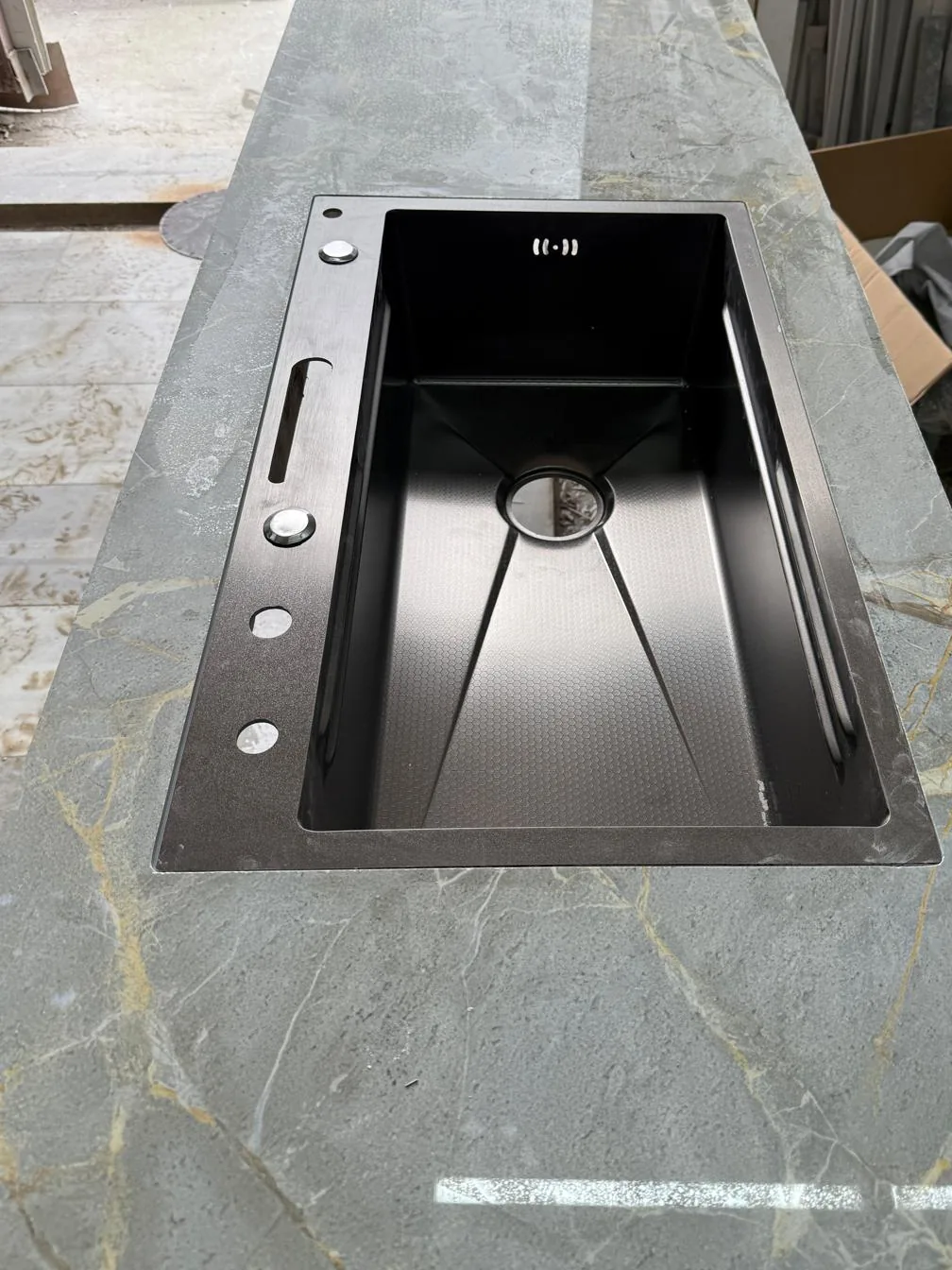
Choosing a countertop usually starts as a decision about colour, but what determines the long-term outcome is the surface finish. Two pieces cut from the same slab, one polished and one honed, behave like two different materials: their colour, their relationship with light and how they age in daily use all change.
What a polished surface does
Polishing means bringing the surface progressively to a shine with abrasive discs. The stone's colour deepens, the vein reads most clearly on this finish, and light reflects. If you have bought a stone whose vein comes forward — Calacatta, a black marble with golden veining, a green stone — polished is the only finish that gives that vein its depth.
The price is visibility. A glossy surface also shows limescale from a drying droplet, dust and fingerprints most clearly. The same goes for acid etching: a drop of lemon juice or vinegar locally removes the gloss and leaves a mark that looks like a matt stain.
What a honed surface does
In honing, polishing is stopped before the gloss stage. The surface stays smooth but matt; the colour is a shade lighter and the vein appears calmer. The practical benefit of a matt surface is this: it hides every one of the marks listed above beyond what the eye can distinguish.
That is why we recommend a honed finish to clients with heavily used kitchens. On a countertop used dozens of times a day, the question is not whether a mark forms but how much it shows once it does.
Acid etching is not a defect
Marble is calcium carbonate based, which means it reacts with acid. This is the nature of the material, not a defect. The mark that forms is not a stain but etching — the gloss has been locally lost, nothing has penetrated the stone. It is corrected by re-polishing, and that can be done with the countertop in place.
An impregnator delays liquid penetrating the stone; it does not prevent etching entirely but markedly lowers the risk of staining. Checking it once a year is enough.
A practical route to the decision
- You want the vein forward and the kitchen to read as a showpiece: polished.
- It is used hard every day and you want low maintenance: honed.
- If you are undecided: see both finishes on the same stone side by side. This difference cannot be understood from a colour chart; the surface comparison on our product pages exists for exactly this.
It also helps to take the finish decision together with thickness and edge profile: on a honed surface a thick laminated edge brings the mass of the stone forward, while on a polished surface a slender edge leaves the movement of the vein to speak.
More