
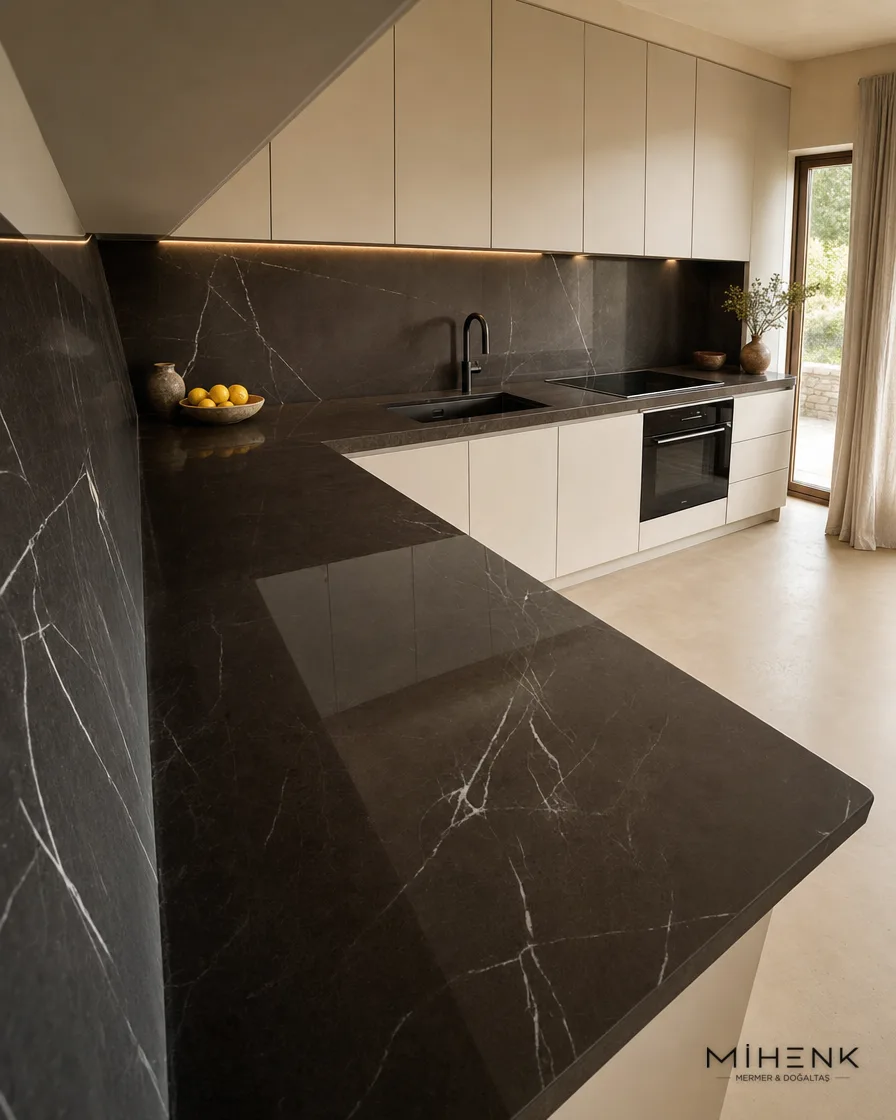
Anthracite Marble Kitchen Countertop
Marble · Anthracite
A polished anthracite marble kitchen countertop; an L-shaped return, a hob cut-out and contrast with light cabinet fronts.
Natural stone kitchen countertops cut to measure. Sink and hob cut-outs are made in the workshop; installation is carried out in one piece.
The kitchen countertop is the most used surface in a home. Dozens of times a day something is set on it, wiped, cut. Choosing a countertop is therefore less a decision about colour than a decision about use: which stone, with which surface finish, at which thickness and with which edge detail, determines how the work will look ten years from now.
The job starts with measuring. The kitchen cabinets come to the workshop only after being fitted, and we take the real dimensions of the cabinet tops and the wall's deviation from square on site. In older buildings walls are rarely truly square; a countertop cut to a drawing will leave a gap when pushed against the wall. We therefore make a one-to-one template from card or MDF and cut to that template.
Sink and hob cut-outs are made in the workshop on a CNC bridge saw. This has two advantages over cutting by hand on site: corner radii come out clean, and the risk of cracking the stone disappears. The corner radius is an important detail, because stone cracks from a sharp internal corner; a small rounding given to the cut corner greatly reduces that risk. If an undermount sink is to be used, the edge of the cut-out is polished separately, since that edge remains visible after installation.
On thickness, the standard is a 2 cm or 3 cm slab. Where a thicker look is wanted at the counter edge, we bond a strip of the same stone beneath the slab to form a laminated edge; this achieves the appearance of 4 cm and above without increasing the weight of the stone. The edge profile can be square, chamfered or radiused; a square edge suits contemporary kitchens, while a radius sits better in classic ones.
On surface finish our advice is clear: in a heavily used kitchen, honed. A polished surface deepens the stone's colour and shows the vein most clearly, but it is also the surface that shows acid etching and water marks most clearly. A honed surface looks a shade lighter and calmer; in return it hides the traces of daily use beyond what the eye can distinguish. If you are undecided, the Surface Section comparison on the product pages lets you see both finishes side by side on the same stone.
Installation is completed in a single day. The countertop is carried onto the cabinets, fixed with silicone and a dedicated adhesive, and the slab joints are filled with coloured epoxy. A well-made joint can be felt by hand but is hard to distinguish by eye. At the end of the process the surface is saturated with an impregnator, which delays liquid penetrating the stone.
Catalogue
Marble · Anthracite
A polished anthracite marble kitchen countertop; an L-shaped return, a hob cut-out and contrast with light cabinet fronts.
 Featured
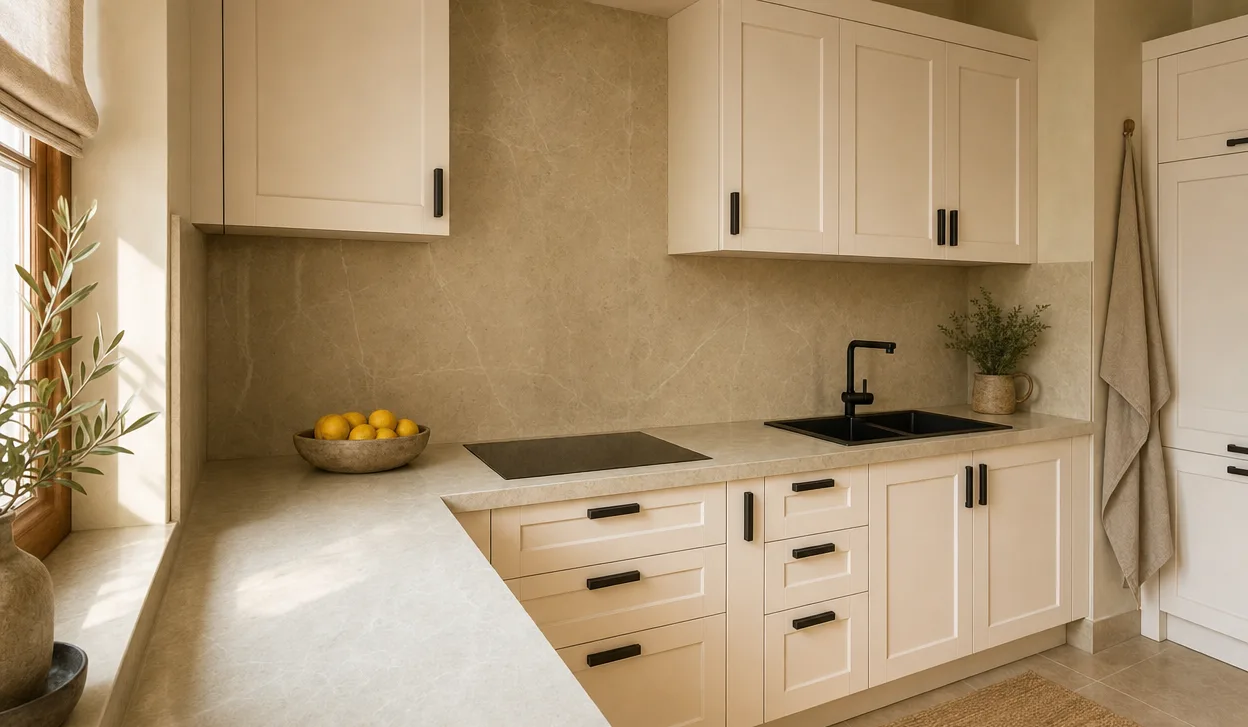
Marble · Beige
A beige marble kitchen countertop and splashback; in a U-shaped layout it continues uninterrupted under the window, with a radiused edge profile.
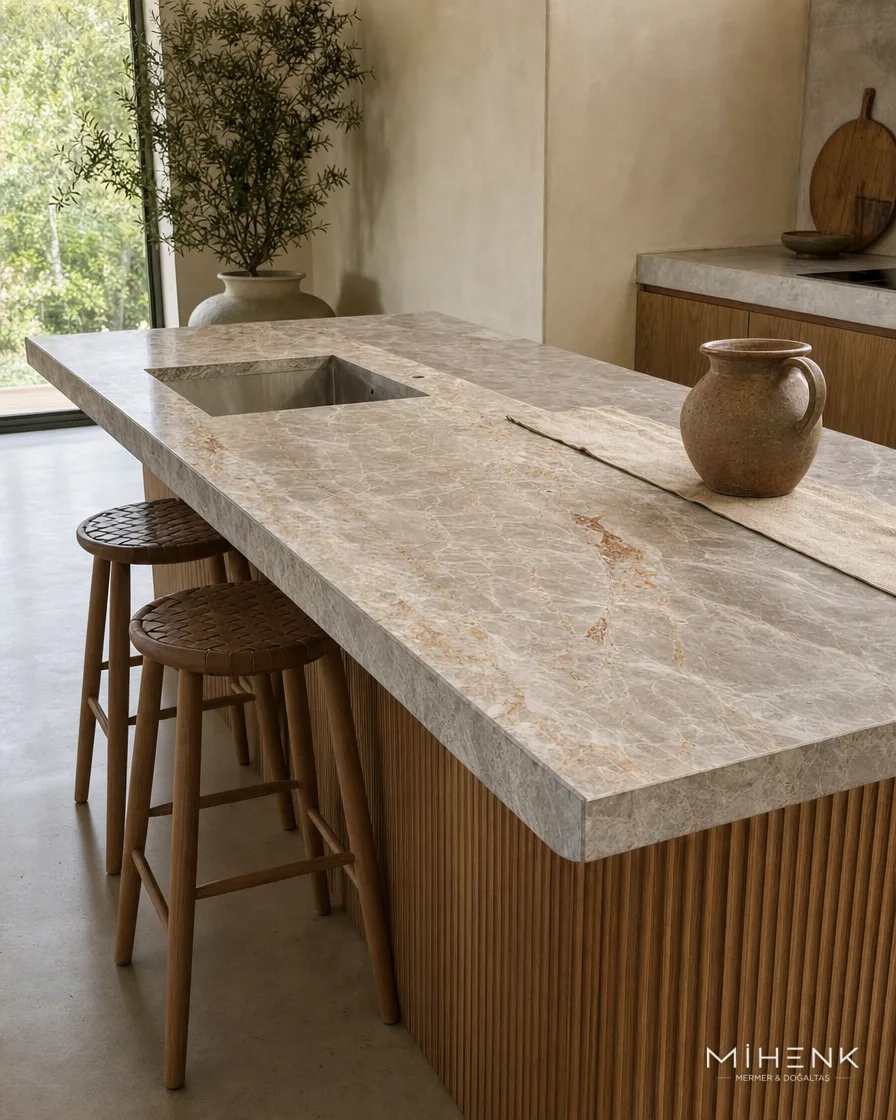
Marble · Beige
A beige marble kitchen countertop with pronounced brown-toned veining. The direction the vein runs across the top is decided before cutting.
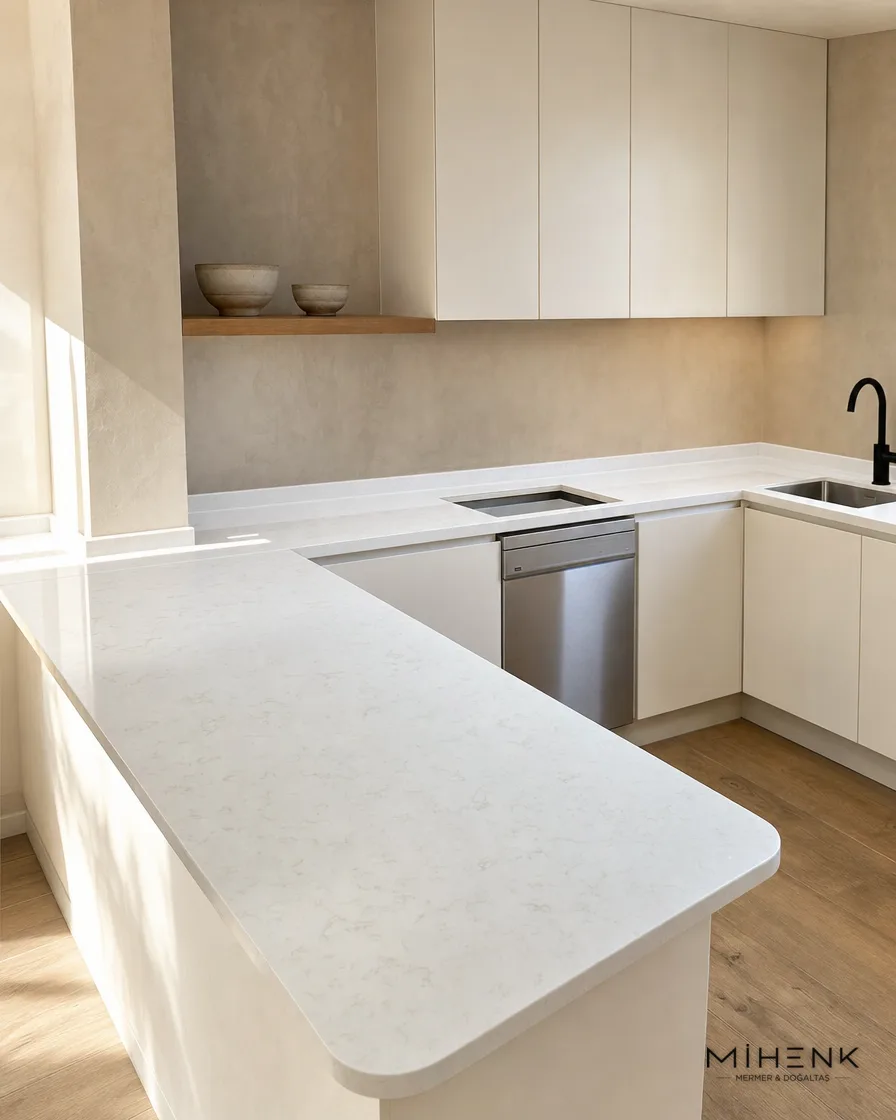
Marble · White
White marble kitchen countertops: replacing the top in an existing timber kitchen, long runs with radiused ends and a double-bowl undermount sink.
 Featured
Marble · White
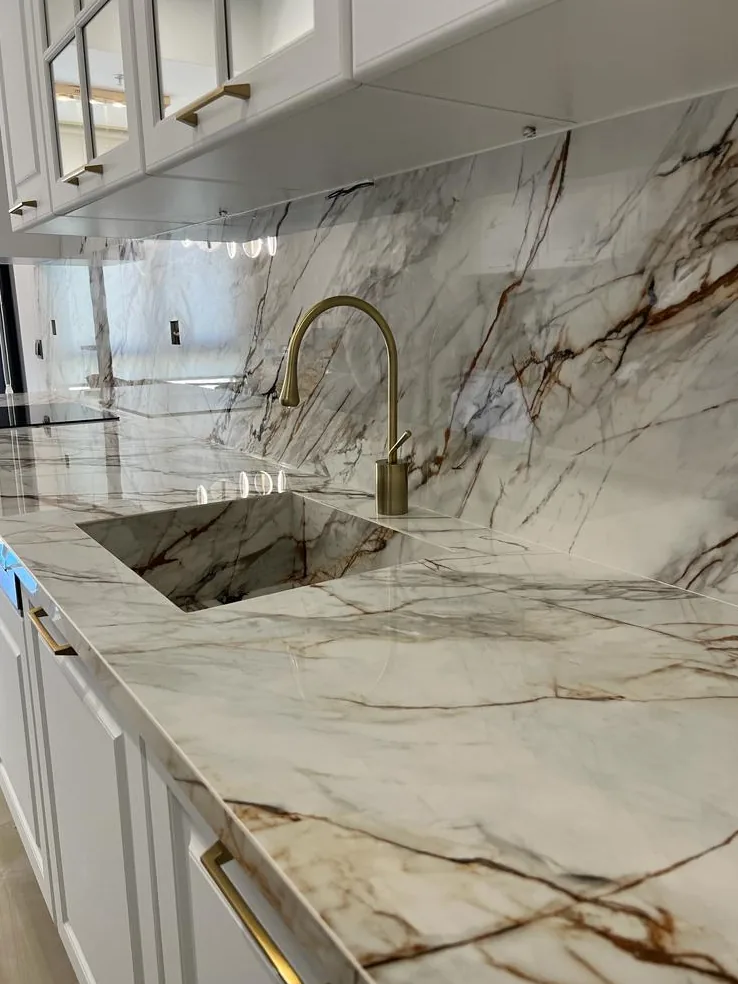
A Calacatta marble countertop and splashback with golden and brown veining. The stone was cut so the vein continues without interruption from top to splashback.
Marble · Grey
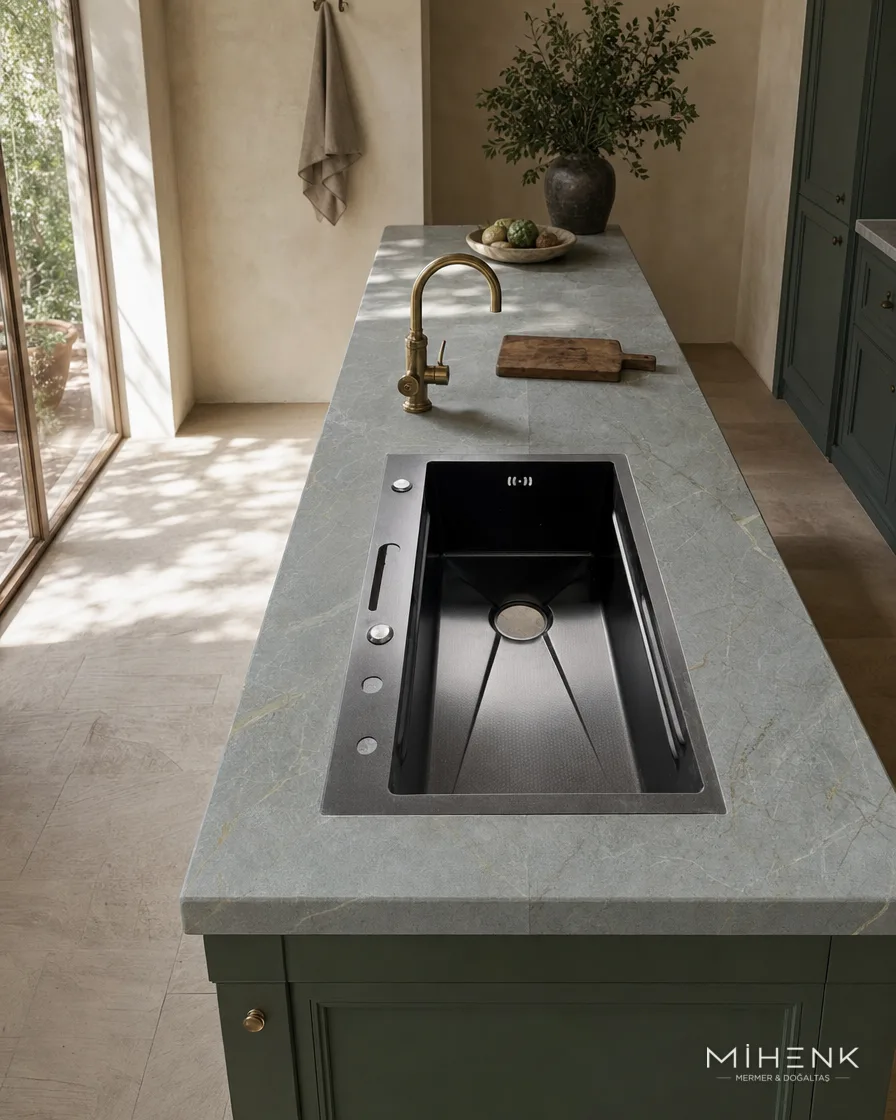
Grey marble kitchen countertops in two different finishes — polished and veined, and honed and plain. Two characters within one colour family.
Frequently asked
Installation is normally completed within a single day: the top is carried onto the cabinets, fixed with special adhesive and silicone, slab joints are filled with coloured epoxy and the surface is saturated with an impregnator. Because sink and hob cut-outs are made in the workshop, no dust-producing work happens on site. It is enough not to load the top during the first hours while the adhesive reaches full strength.
Other areas