
 Featured
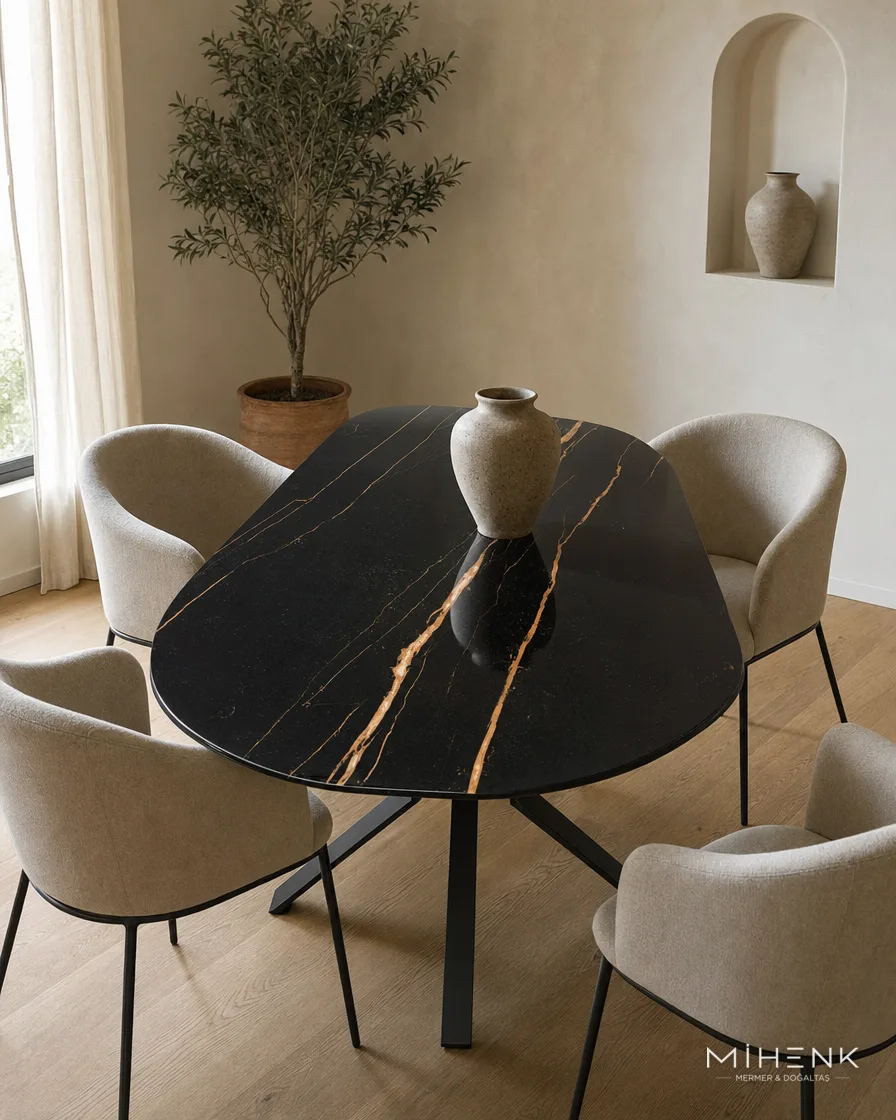
Black Marble Dining Table with Golden Veining
Marble · Black
An oval marble table top, golden veining over a black ground, mounted on a black metal base with a radiused edge profile.
Oval, round and rectangular stone table tops. Slab selection, weight and the leg system are decided together.
The stone table top is the most varied group of work in our catalogue: we make oval, round, rectangular and free-form tops. What they share is this — a table top does not settle into a space the way a countertop does; it becomes furniture in its own right. Slab selection is therefore more decisive here than on a countertop.
On a countertop, where the vein runs is bounded by the cabinet line and the wall; on a table top the top stands alone and is walked around. As in the black gold-veined round table in this catalogue, when the vein passes through the centre the table is built around a single gesture. In such single-pattern work we pay close attention to which region of the slab is used; a circle taken a metre to the side of the same slab would be an entirely different table.
Weight is a more significant constraint on a table than on a countertop. A marble top 3 cm thick is roughly 80 kilograms per square metre; a 160x90 cm rectangular top therefore passes 110 kilograms. That weight has two consequences. First, the leg system: a standard furniture leg will not carry the load, so a steel structure or a central pedestal is required. The star- and X-form metal legs used on the tables in this catalogue came out of that need. Second, transport: because the top is a single piece, whether it can be carried up a staircase has to be worked out in advance. We discuss this at the measuring stage; if necessary the top can be planned in two pieces with the joint concealed.
The edge detail is the decision that changes a table's appearance the most. A square edge shows the top's thickness as it is and reads as contemporary. An edge chamfered from below makes the top optically thinner and the table look lighter. A laminated thick edge does the opposite: a 3 cm slab yields a top that reads as 6 cm and the table gains weight. The images in this catalogue let you compare these three details.
Surface finish on a table depends on habits of use. A polished surface shows the vein most clearly and is easy to wipe, but it also shows scratches and acid marks most clearly. A honed surface is more forgiving of daily use. Not leaving acidic liquids such as wine, lemon and vinegar standing for long applies to both finishes.
Catalogue
Featured
Marble · Black
An oval marble table top, golden veining over a black ground, mounted on a black metal base with a radiused edge profile.
Marble · Black
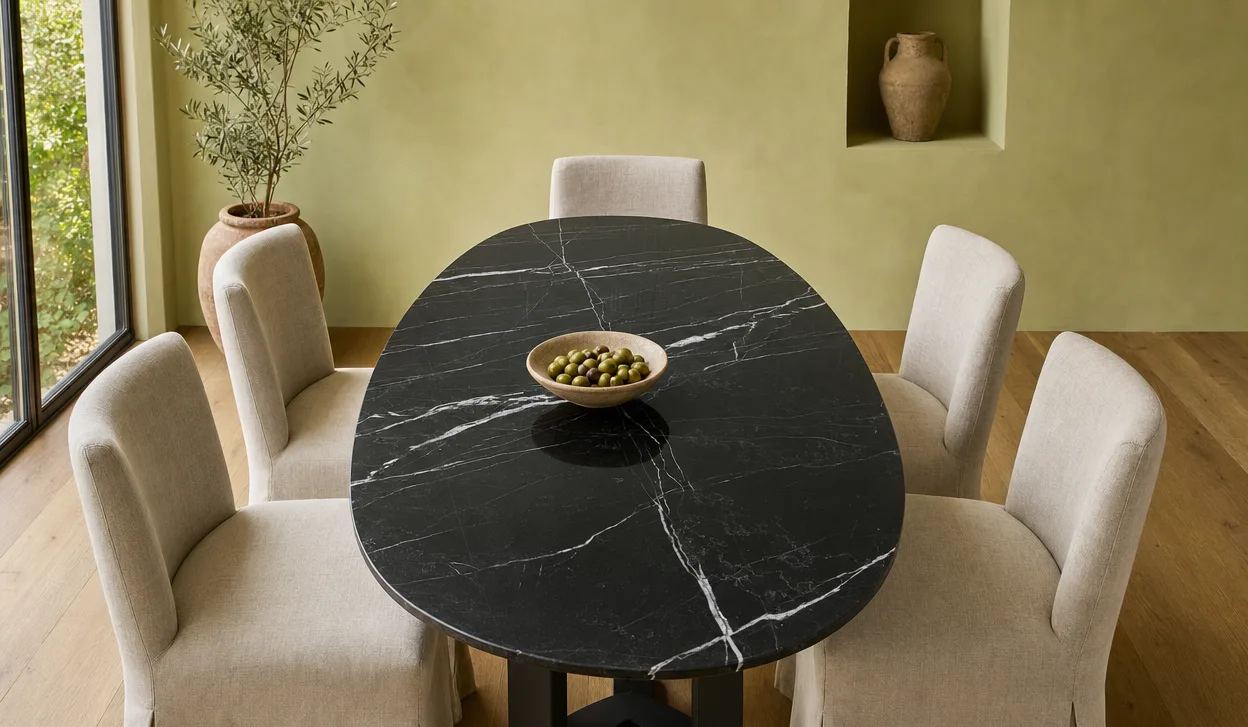
An oval dining table top in black marble with white veining. The vein is crisp on the polished surface; the edge is radiused.
Marble · Black
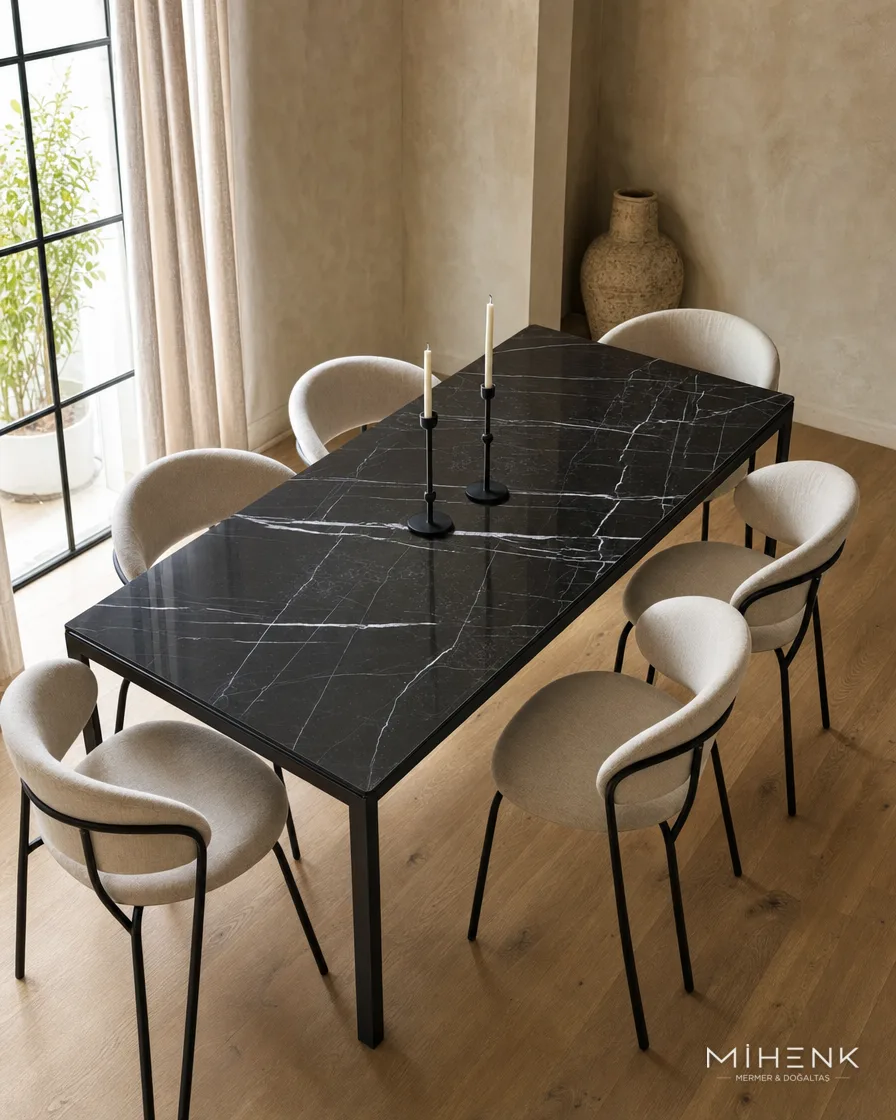
A rectangular table top in black marble with white veining; radiused corners and a polished surface.
Marble · Black
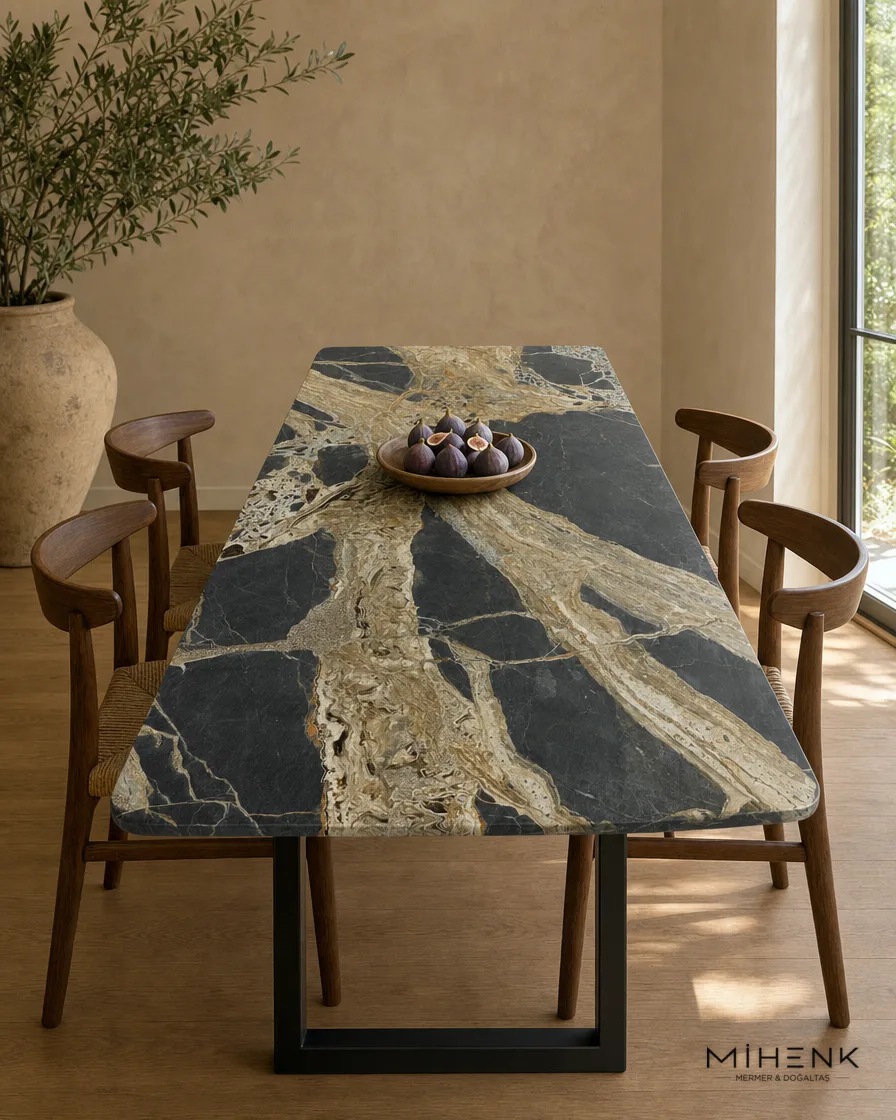
A table top with exotic beige and golden veining over a black ground. Because every slab yields a unique pattern, slab selection is central to the work.
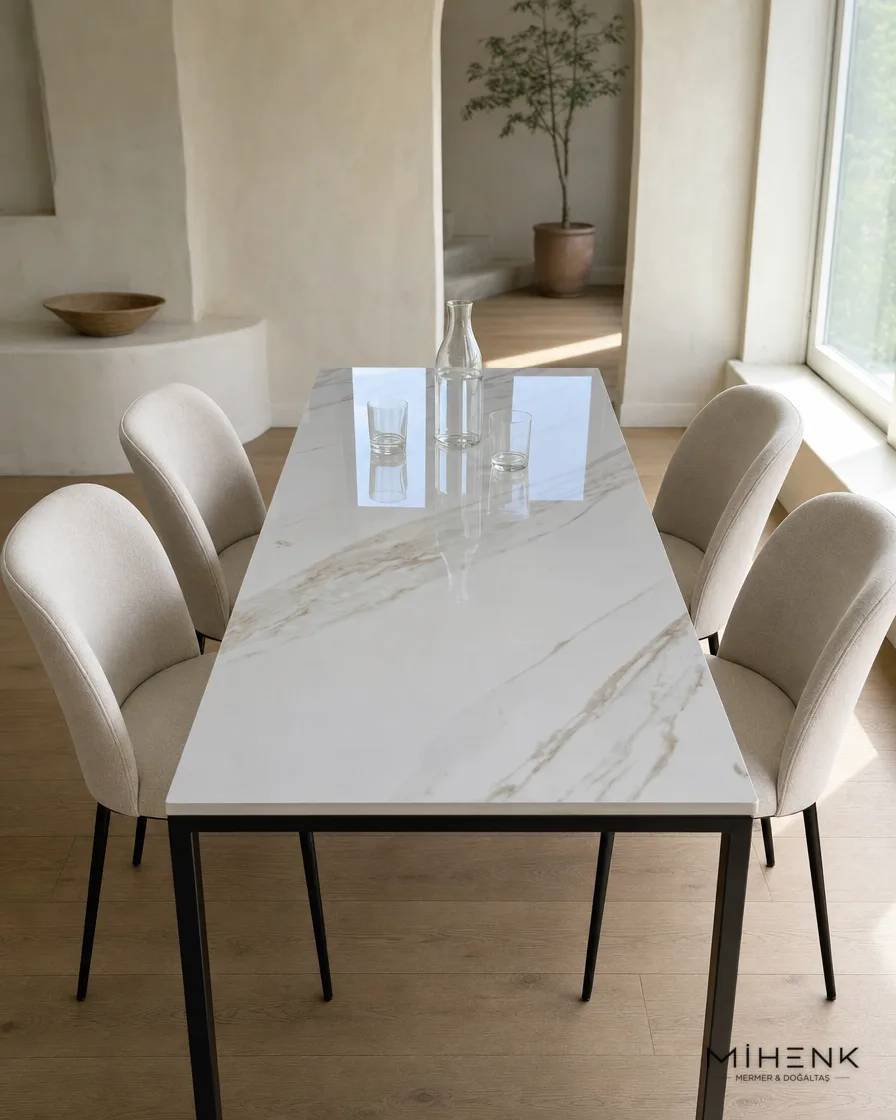 Featured
Marble · White
White marble dining table tops: rectangular with fine grey veining, long runs with golden veining, and round forms.
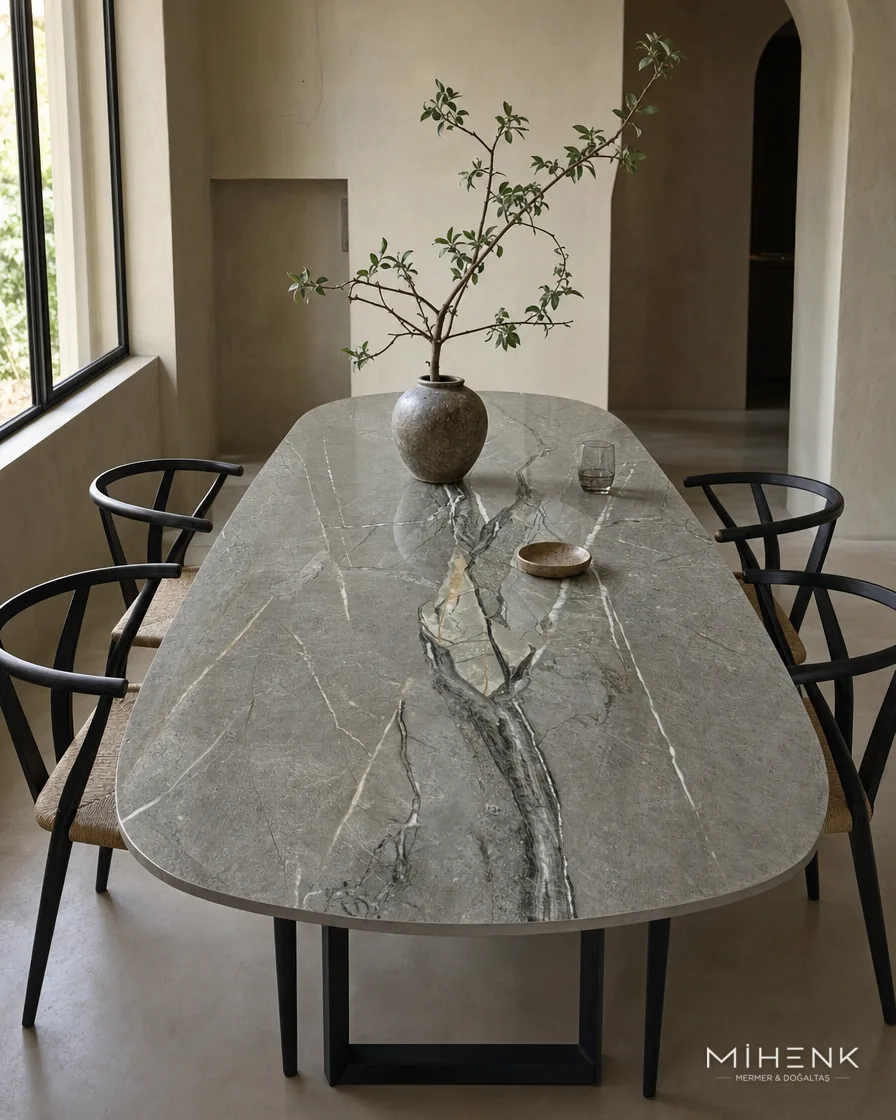
Marble · Grey
A grey marble dining table top with curved ends (stadium form); the vein runs through the centre as a single line.
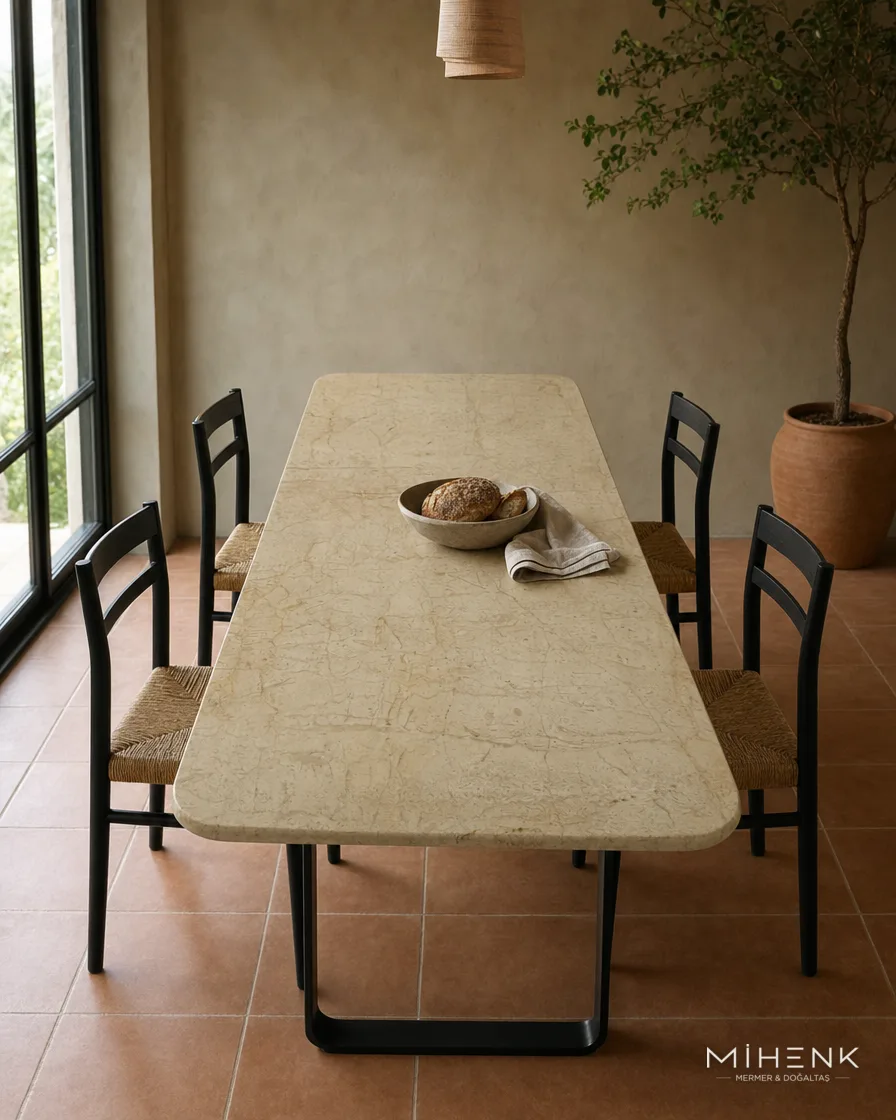
Marble · Beige
A rectangular dining table top in cream-beige marble; fine reddish veins form a calm texture over a warm ground.
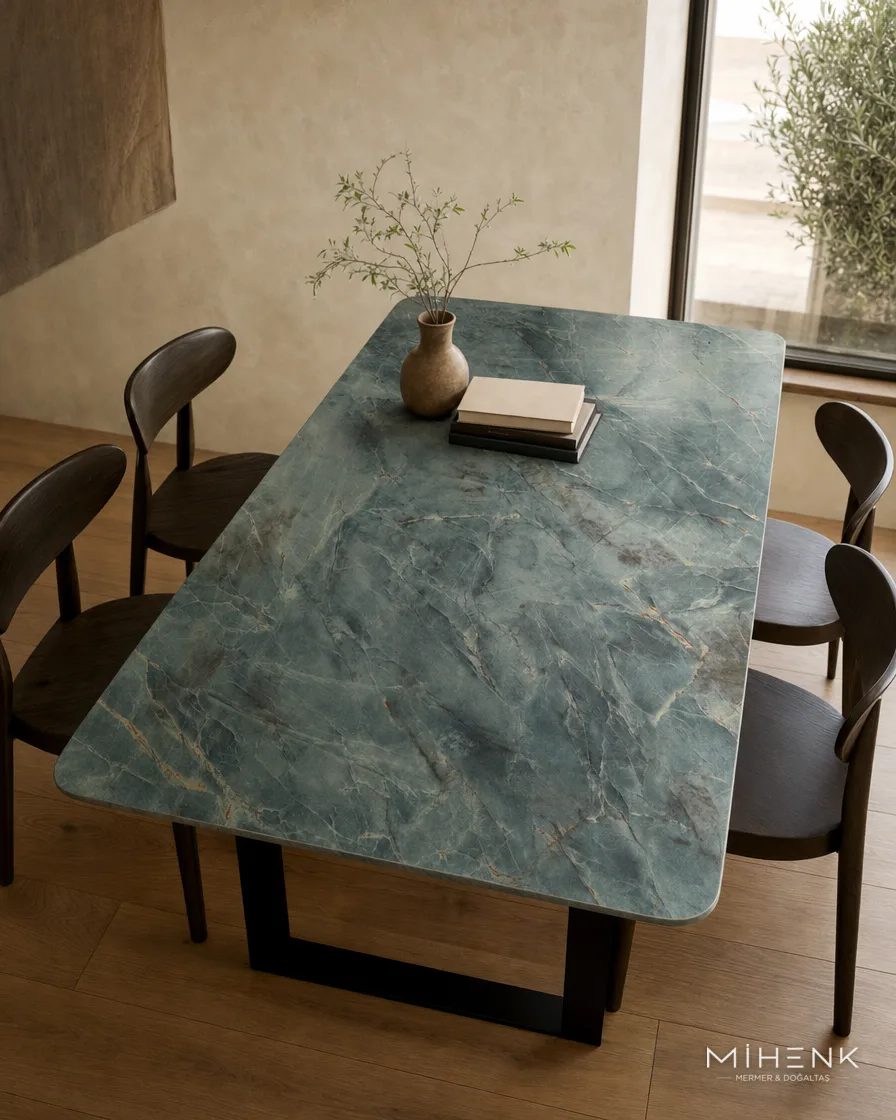 Featured
Marble · Green
A large green marble dining table top mounted on a black metal base. Nesting table tops were cut from the same slab.
Marble · Grey
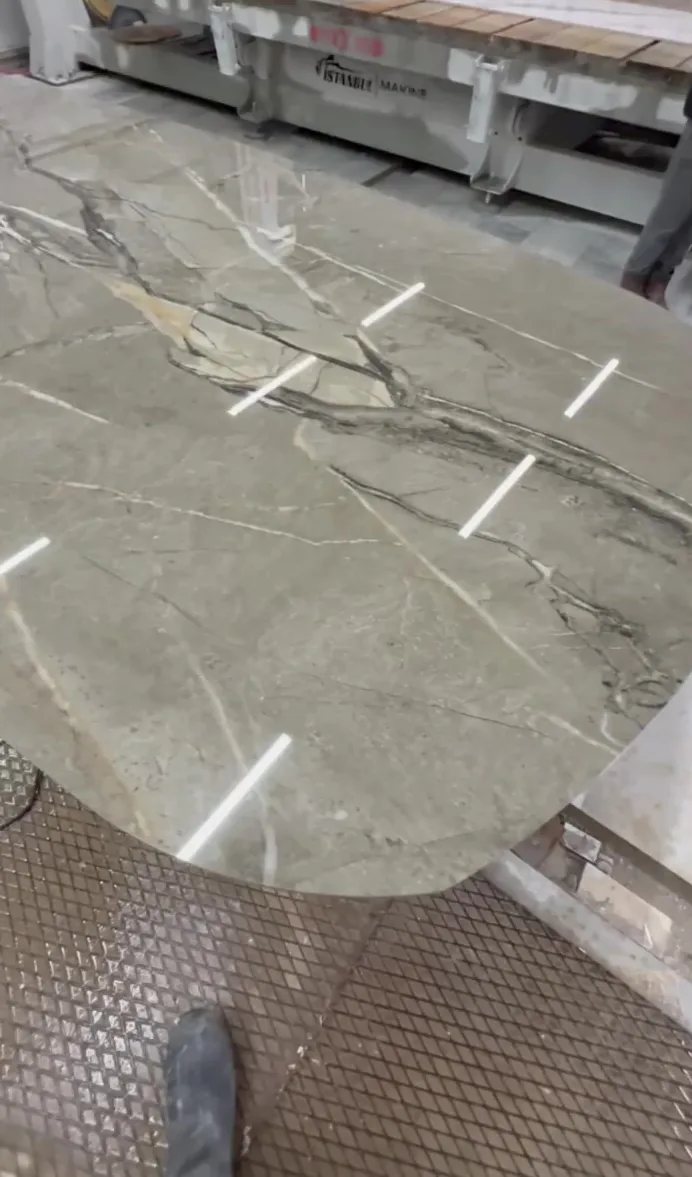
Grey marble slabs and cut-to-measure service. The image shows a slab curve-cut for an oval table top.
Frequently asked
We produce and cut the top; the base is usually resolved together with a metal or furniture workshop. What matters is that the two are calculated against each other: the arms of the base must grip the centre of gravity of the top, otherwise deflection forms in the middle of wide tops. The base design is therefore decided at the same time as the thickness and edge detail. If you already have a base, we prepare the top to its dimensions.
Other areas