A bathroom vanity top is a smaller surface than a kitchen countertop but a harder environment. It is in constant contact with water, steam, soap and cleaning products. In bathroom work, preparation therefore matters as much as the choice of stone: how the surface is finished and whether the impregnation was properly applied determine how the top will look five years on.
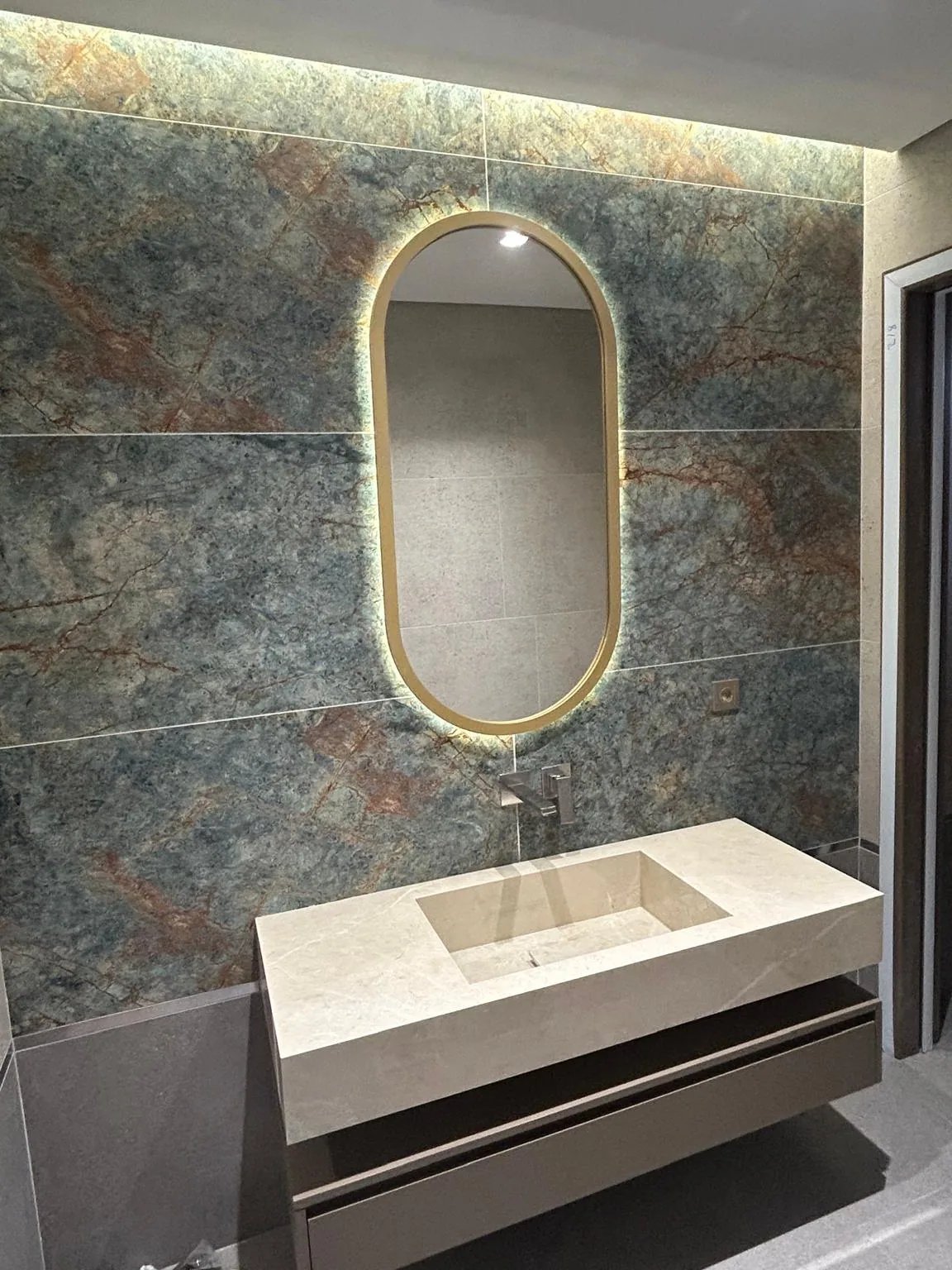
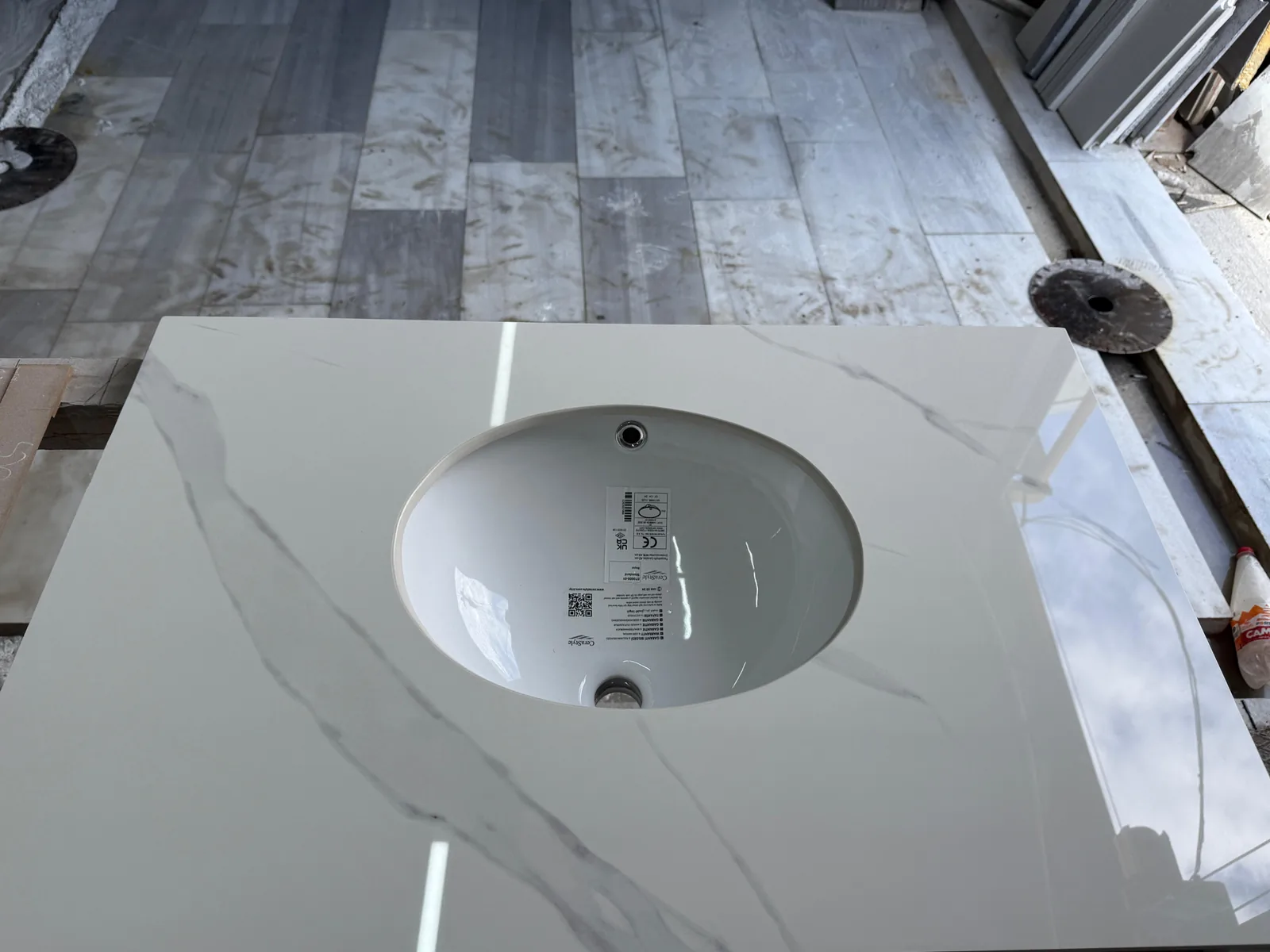
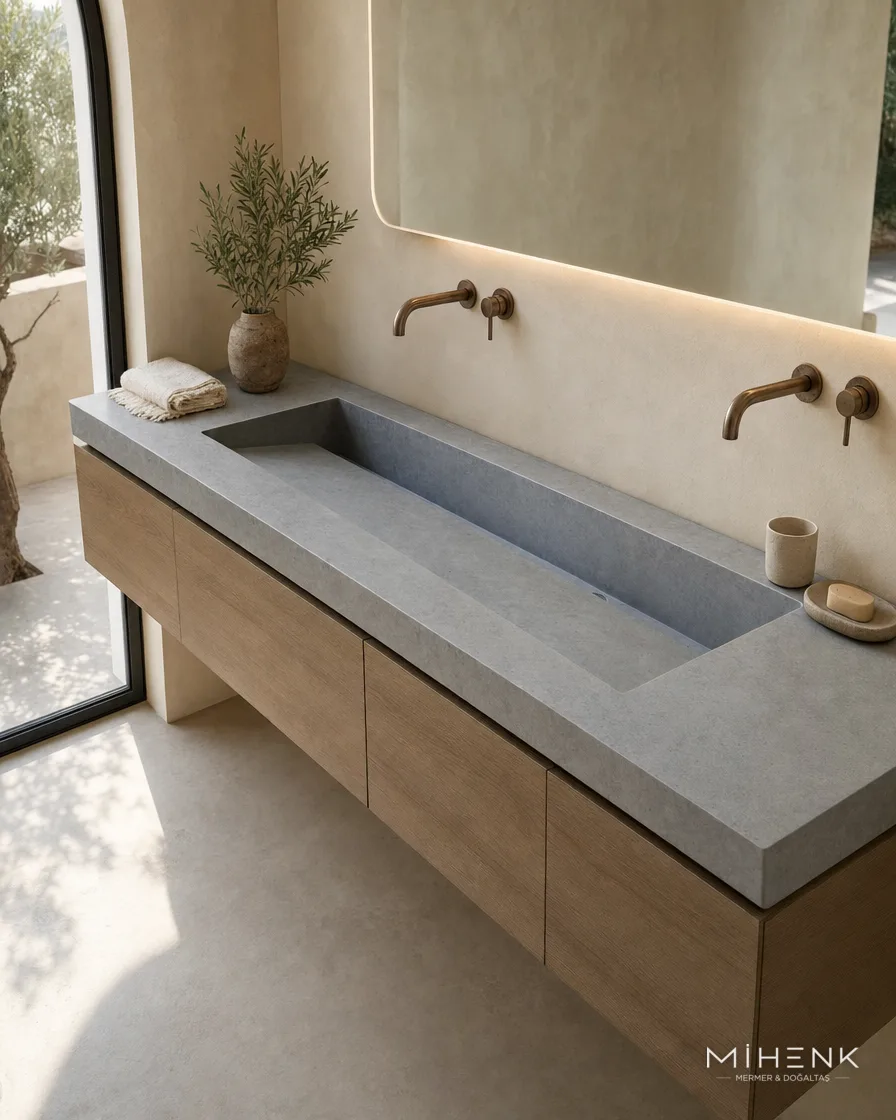
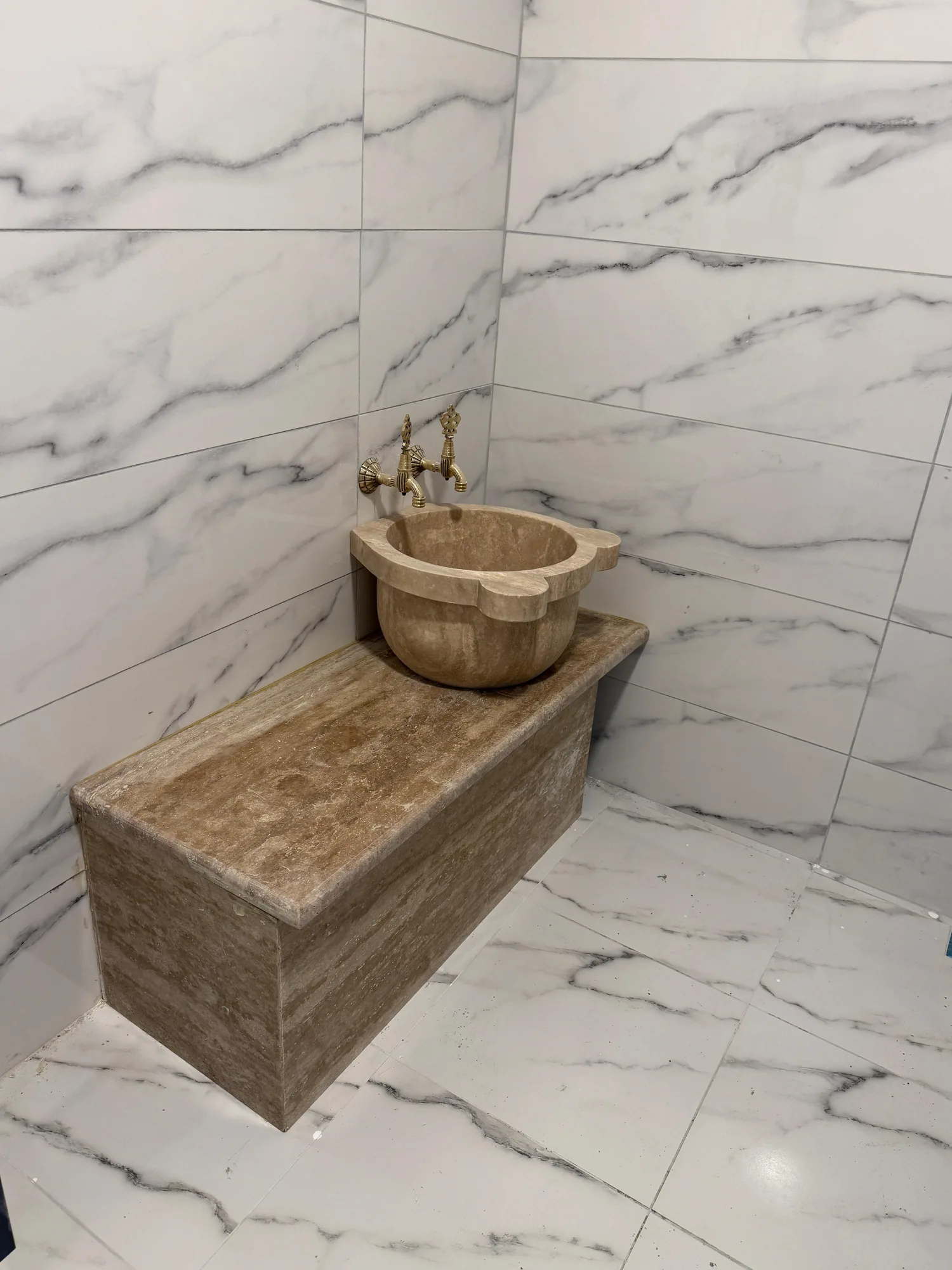
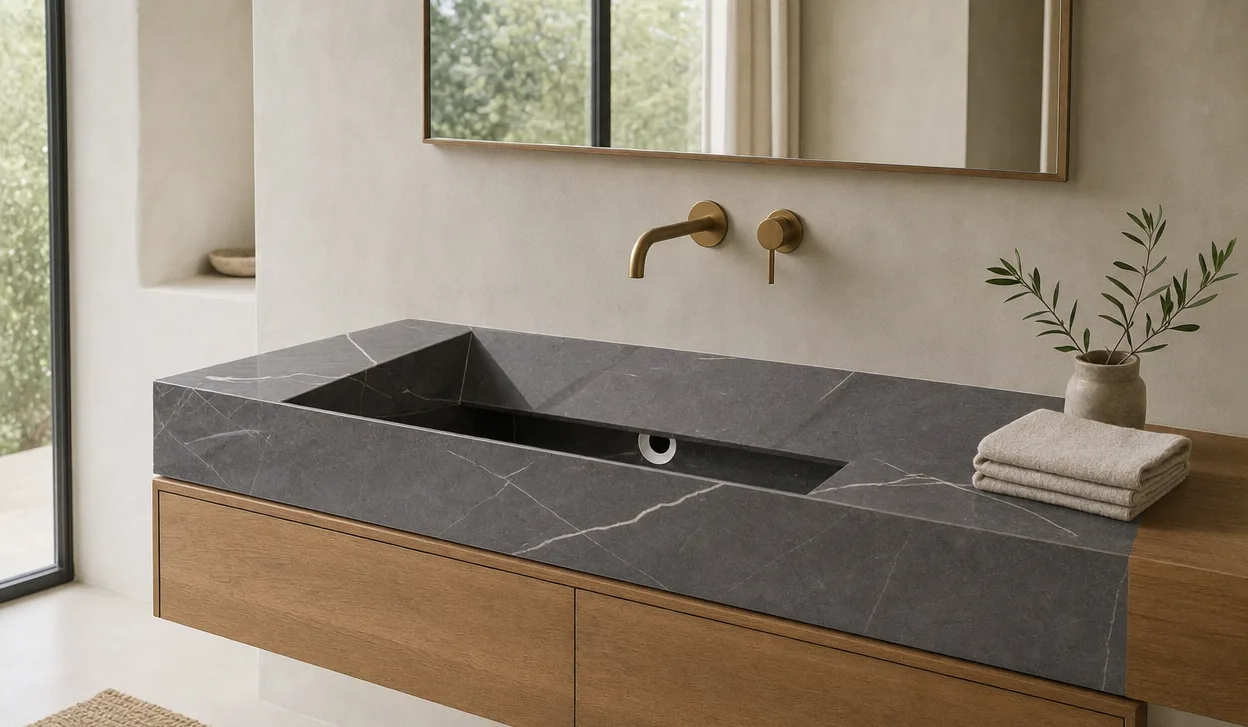
We work with three different arrangements. First, a top with a basin cut-out: a ready-made basin sits into the top, set either over or under the surface. In undermount installation the edge of the cut-out is polished, since that edge stays visible and is touched by hand. Second, a basin carved from the stone: the basin is not a separate piece but is carved out of the top itself. This is the solution seen in the anthracite and beige bathroom tops in this catalogue; with no joint, the risk of water seepage disappears and a single-piece appearance is achieved. Third, a wall-hung (floating) top: with no base cabinet, all the load goes onto a concealed steel structure, and the thickness and weight of the top are calculated accordingly.
On surface finish we recommend honed more strongly in bathrooms. A polished surface shows the drying mark of a water droplet distinctly; on a matt surface that mark is all but invisible. On a wet floor, moreover, a honed or antiqued finish is less slippery than a polished one.
The drainage detail is a small matter that changes the outcome. In a carved basin the base needs a slight fall towards the waste; otherwise water collects in the base and a limescale mark forms over time. That fall is given by CNC in the workshop — it cannot be given on site. Likewise the waste and tap holes are cut to size in the workshop; a hole drilled on site carries the risk of cracking the stone.
Impregnation is more critical in a bathroom than in a kitchen. Once the surface is saturated, water beads on the surface instead of penetrating the stone's pores, which markedly reduces both staining and limescale build-up. The impregnation needs renewing every two to three years; we explain how to do this at handover.

 Featured