
· Site Yöneticisi
Choosing Fill and Direction of Cut in Travertine
One travertine block yields two entirely different materials depending on the direction of cut. Filled or unfilled, vein cut or cross cut? Where it will be used decides.
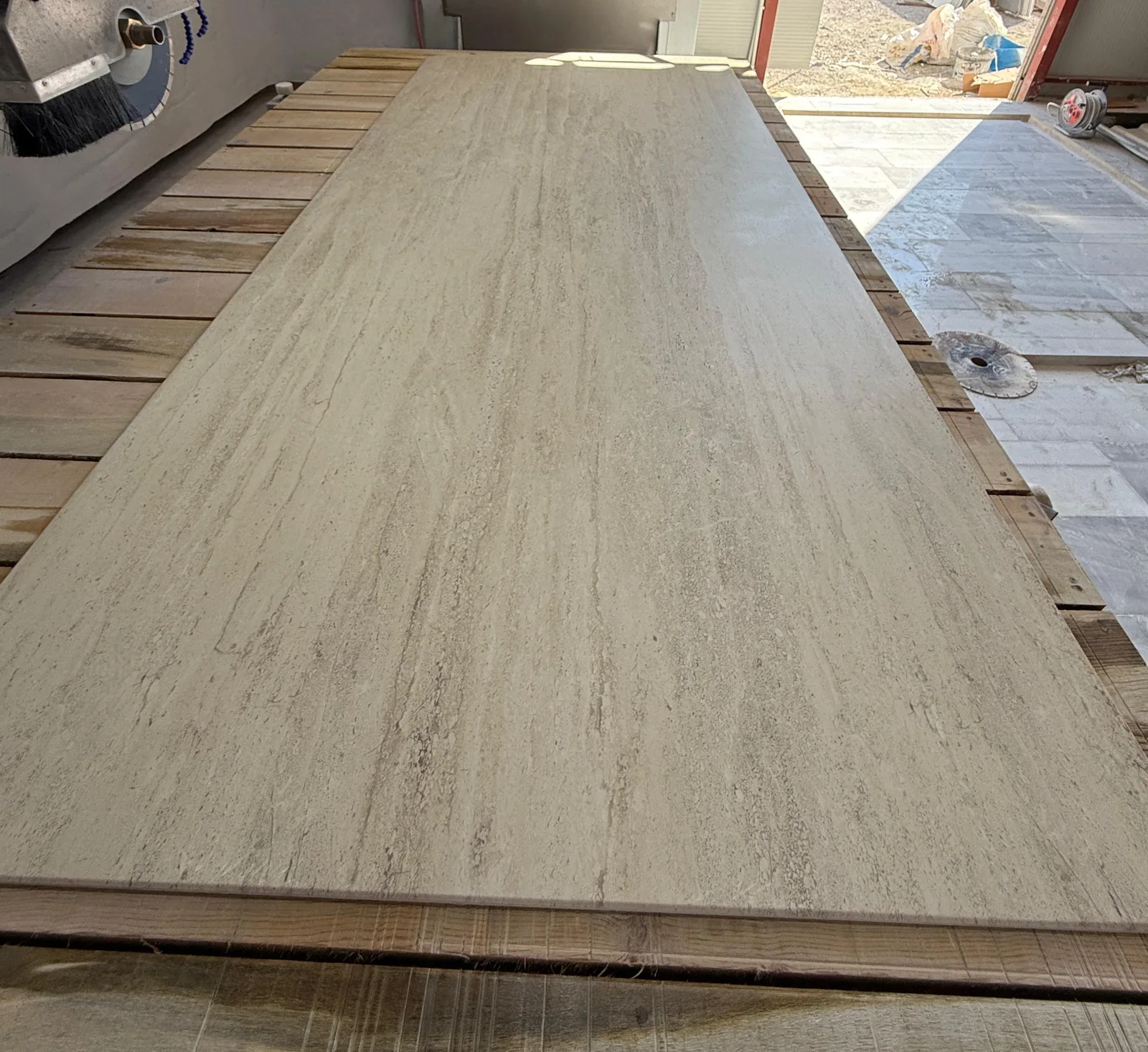
Travertine forms when spring water, saturated with lime, reaches the surface and precipitates. This manner of formation directly determines its texture: pores left by water and gas bubbles, and horizontal lines left by layer-upon-layer accumulation. Where marble is sought for its vein, travertine is sought for this texture.
Direction of cut: vein cut or cross cut?
When ordering travertine, direction of cut should be discussed before colour, because one block yields two different materials.
- Vein cut (perpendicular to the bedding): the horizontal lines emerge and the stone turns into a striped texture. When you want a directional surface — wall cladding, an island body, a plinth — this cut gives the room a line.
- Cross cut (parallel to the bedding): gives a clouded, diffuse, calmer surface. Preferred on floors and broad surfaces, because the repetition of pattern does not tire the eye.
Which cut is used on a kitchen island can make the same stone look like two entirely different materials. The decision should be taken together with the architectural direction: horizontal lines widen a room, a clouded surface stays neutral.
Filled or unfilled?
Porosity is travertine's most frequently questioned property. The stone is applied in two preparations:
- Filled: the pores are closed with a filler of the same tone. The surface cleans more easily. This is our recommendation for wet or heavily used areas — kitchens, bathrooms, floors.
- Unfilled: the pores are left open and the texture of the surface itself shows. Preferred where texture is meant to come forward: wall cladding, side tables, exteriors. The price is maintenance, since open pores collect dirt over time.
In both cases, saturating the surface with an impregnator delays liquid penetrating the stone and markedly lowers the risk of staining.
Finish and softness
Honed, brushed and antiqued surfaces come to the fore in travertine. On a brushed surface, steel and nylon brushes lightly remove the softer veins while the harder zones remain, so the layered structure becomes tangible by hand. An antiqued surface is preferred on wet floors and outdoors because it reduces slipping.
Travertine is a softer stone than marble. That means ease of working, but it also means the surface is more open to scratching. On a heavily used kitchen countertop, using a chopping board should become a habit. In return, travertine offers a softness marble cannot give — both in its warm tonal range and in the way its porous surface diffuses light.
More