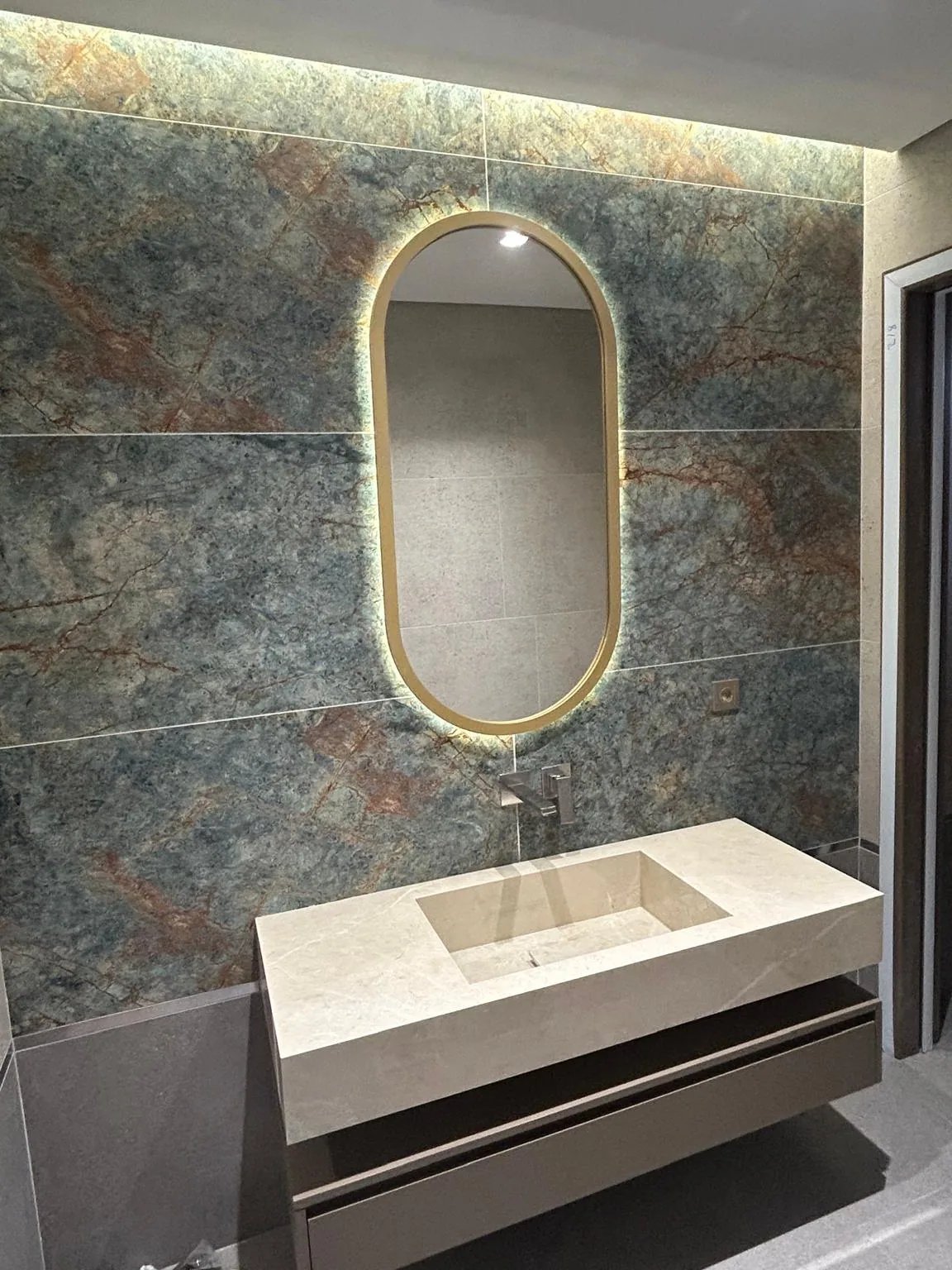
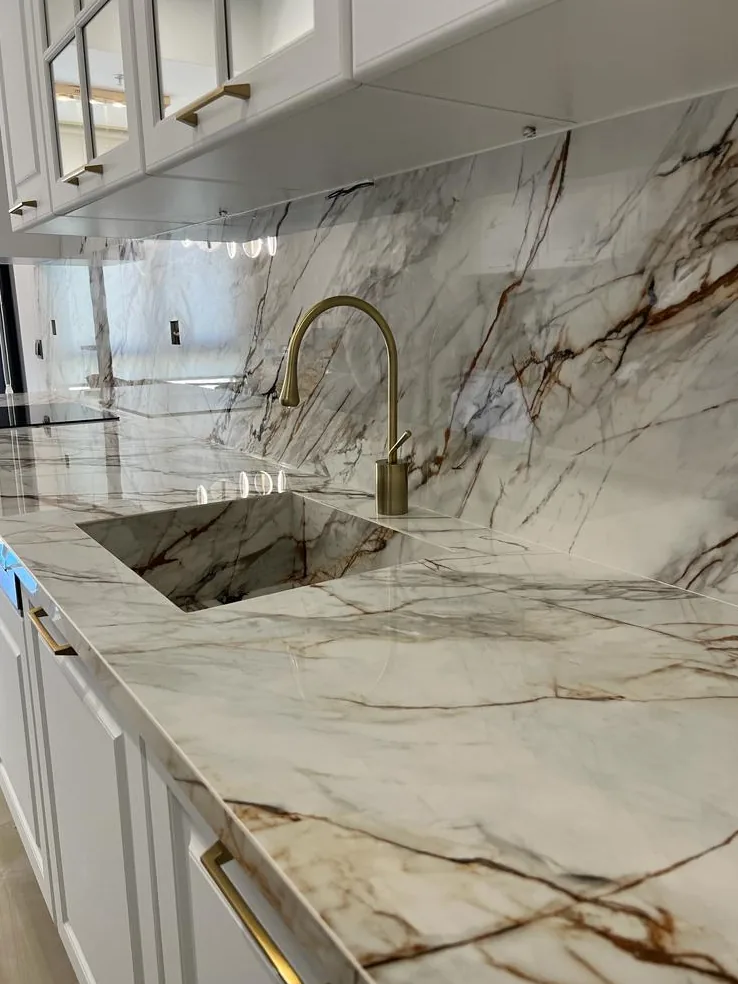
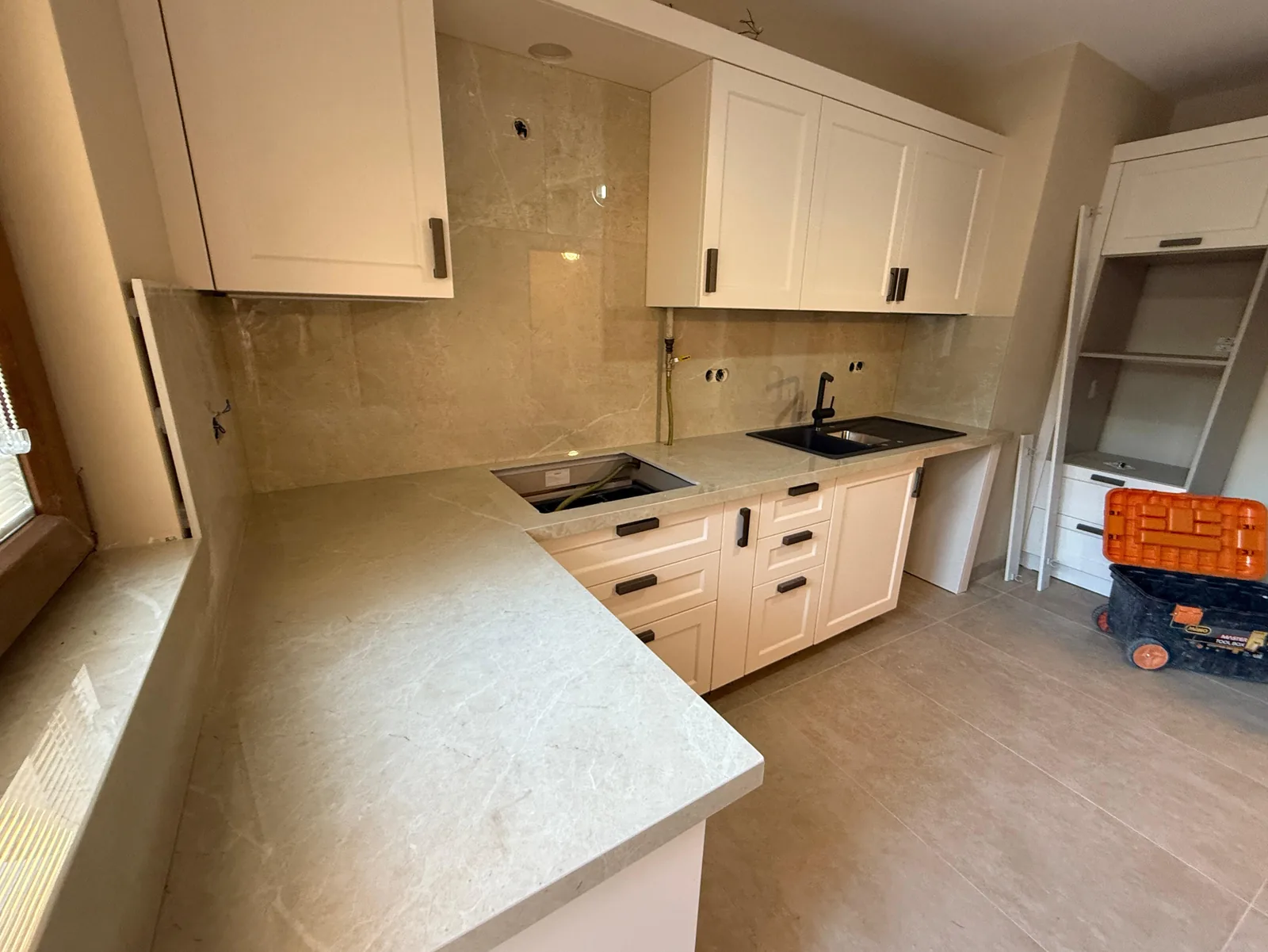
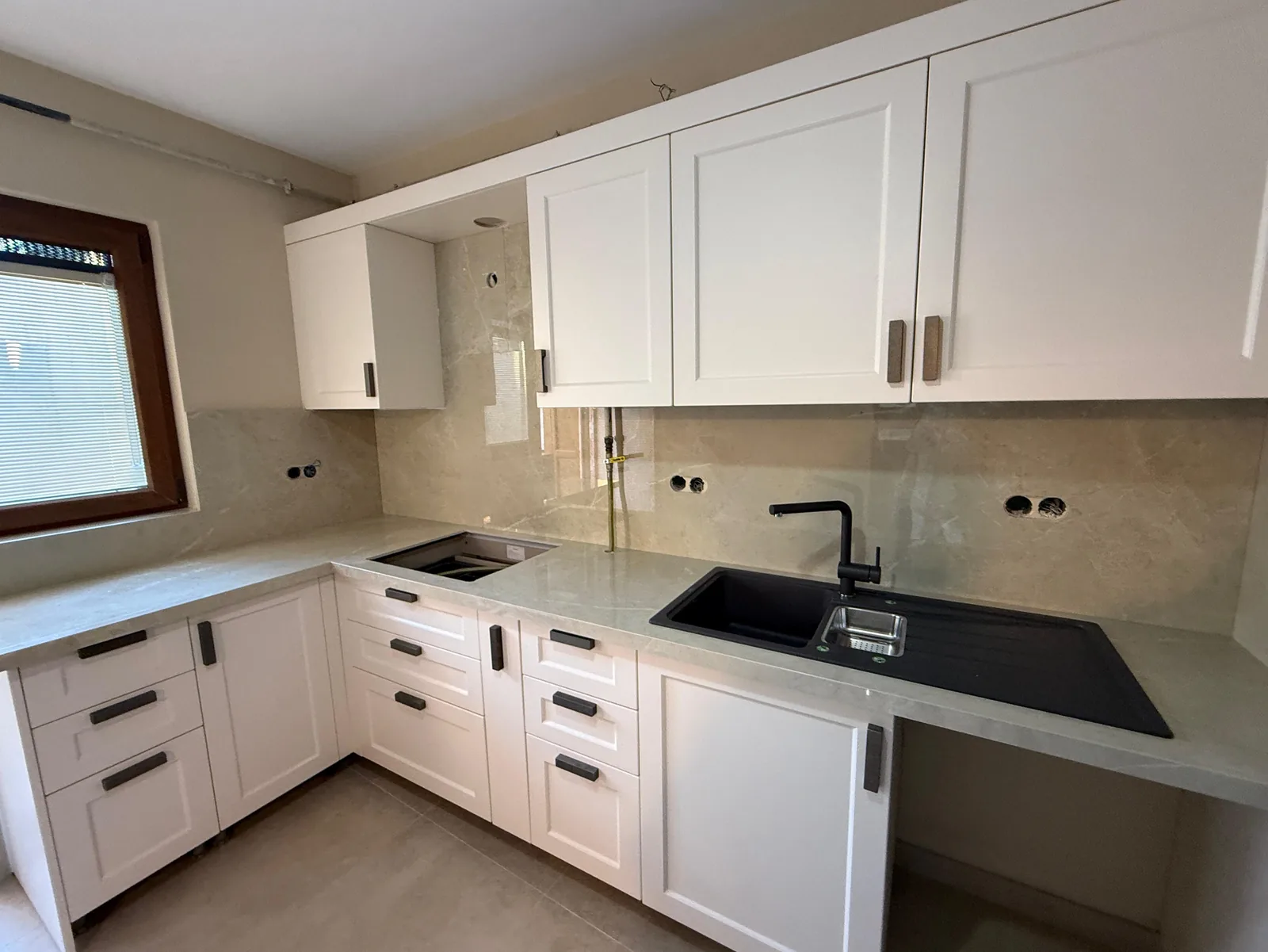
Beige marble is the family chosen to soften the hardness of a white cabinet front. Because it carries a warm ground tone it stands well beside white in classic and transitional kitchens; its vein movement is usually calm, so it does not become tiring across long stretches of countertop.
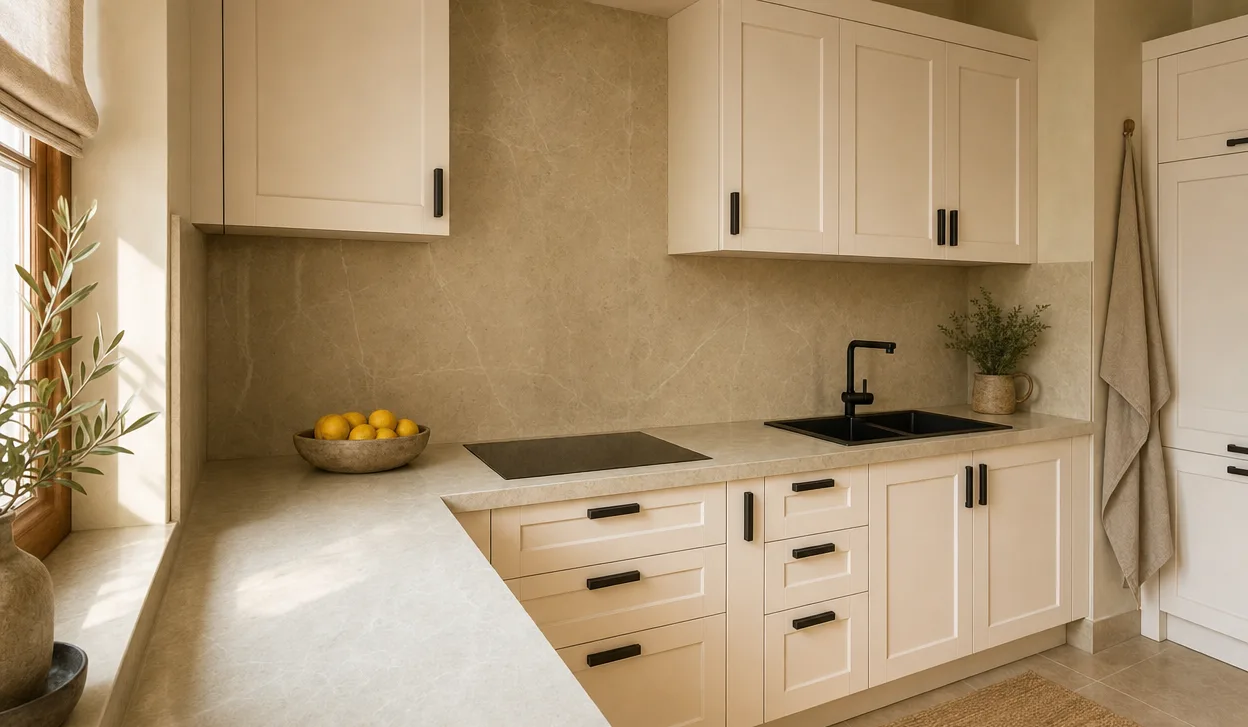
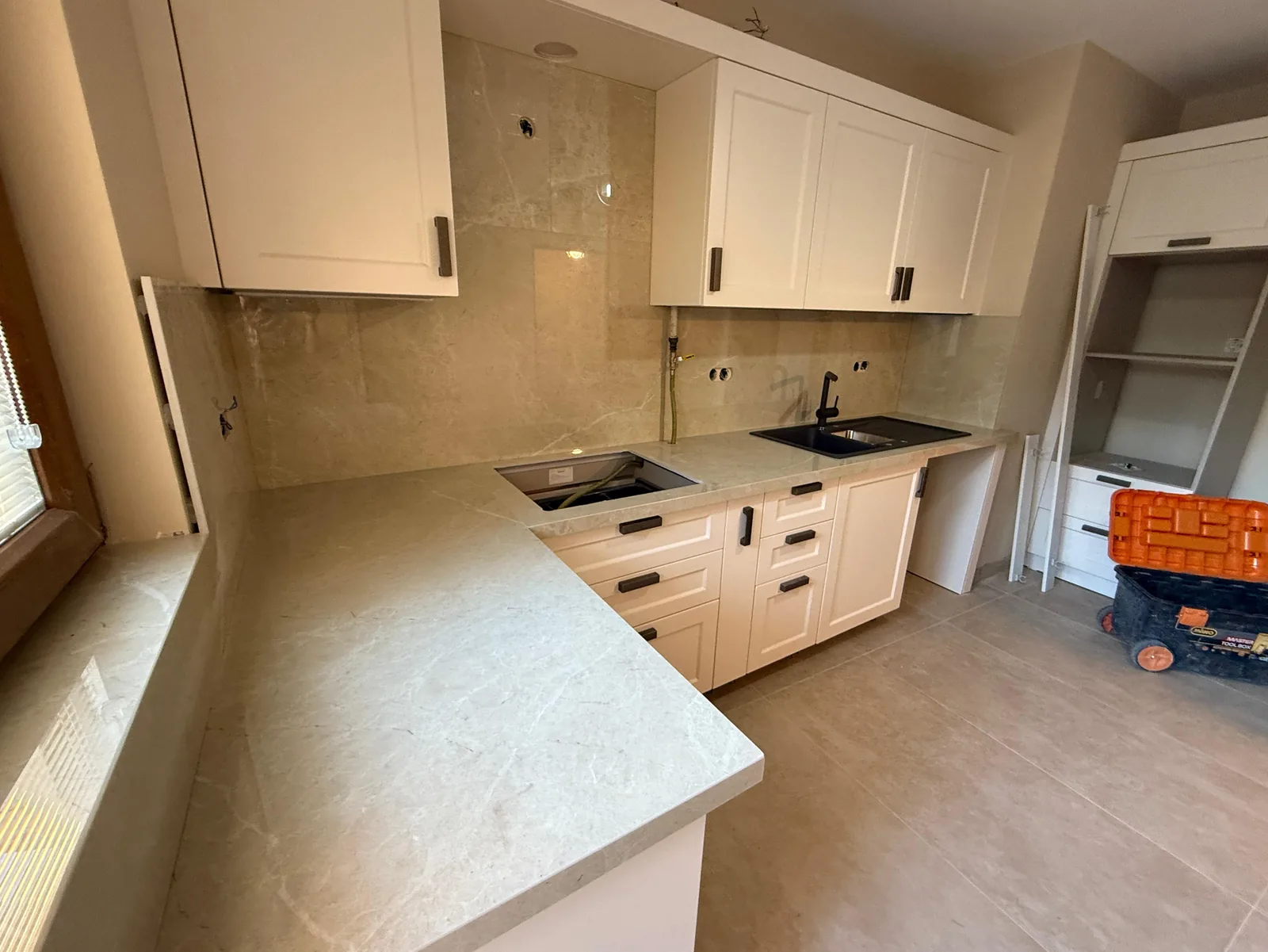
In the kitchen shown here the top works in a U-shaped layout and continues without interruption into the counter beneath the window. On continuous surfaces like this, measuring matters even more: in older buildings walls are rarely truly square, and a top cut to a drawing leaves a gap when pushed against the wall. We make a one-to-one template from card or MDF and cut to that template.
The edge was profiled with a radius; in classic kitchens a radius sits better than a square edge and is more forgiving of knocks in daily use. A splashback in the same stone removes the silicone line between wall tiles and countertop — the detail that soils fastest in a kitchen.
If you are undecided, the surface comparison lets you see polished and honed side by side on the same stone.

 Featured