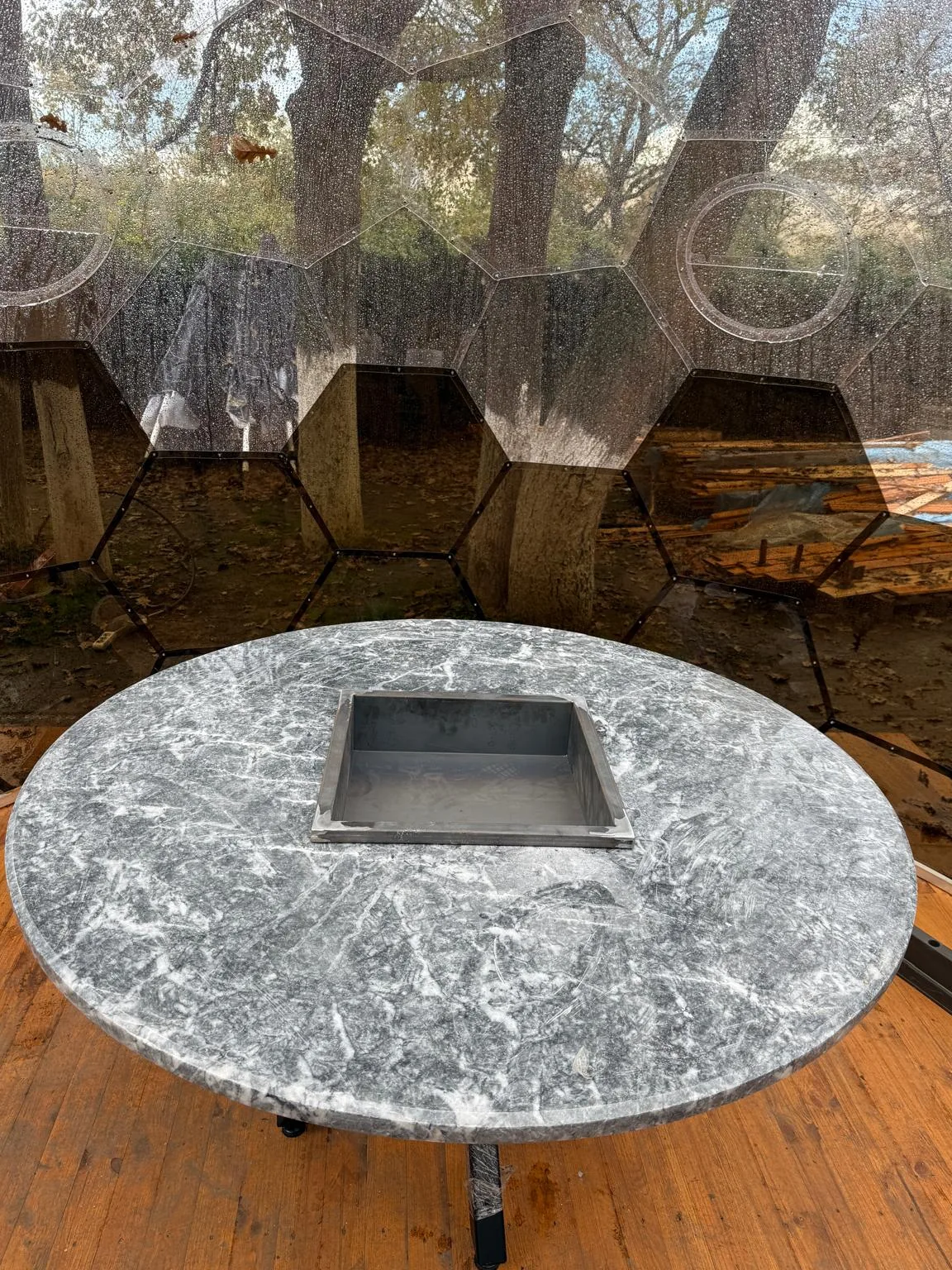
A barbecue table is prepared differently from an ordinary table top because of the stainless insert set into its centre. An opening is cut at the centre of the top for the square insert; its corners are radiused, since in an area that heats and cools a sharp internal corner becomes the starting point of a crack. Rather than direct contact between insert and stone, clearance and insulation are left: marble withstands heat, but a sudden temperature difference builds stress in the stone and that stress needs somewhere to release.
The round top is cut from a single centre, and the edge profile continues identically all the way around. On a table used in a garden, a radiused edge is a practical choice: the risk of knocks is higher outdoors.
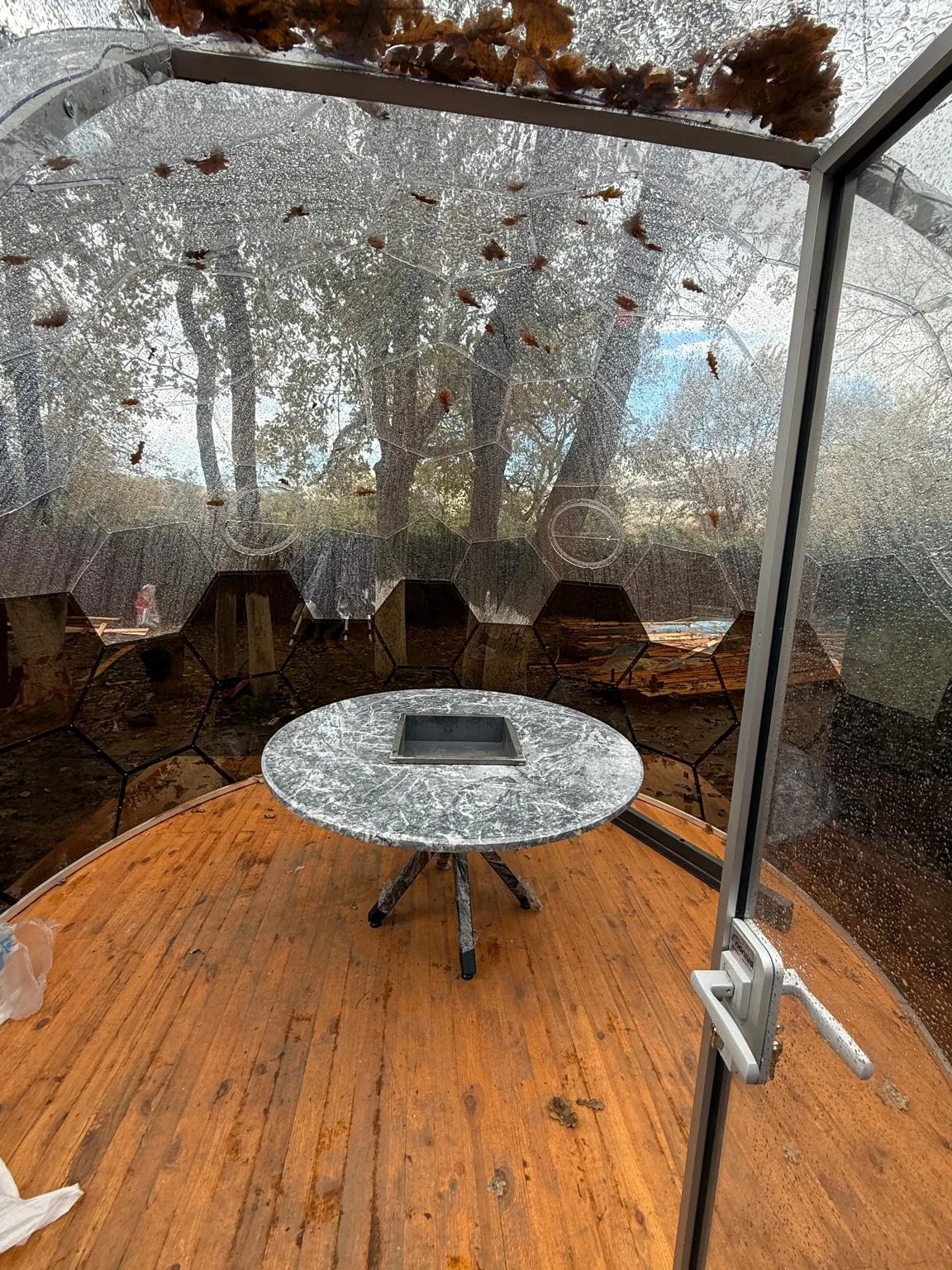
Outdoor use also affects the finish decision. On a surface that gets wet and goes through freeze-thaw cycles, a polished finish can be slippery; outdoors we therefore recommend an antiqued or honed surface. The table in these images is used beneath a glass dome, in an area sheltered from rain.

 Featured