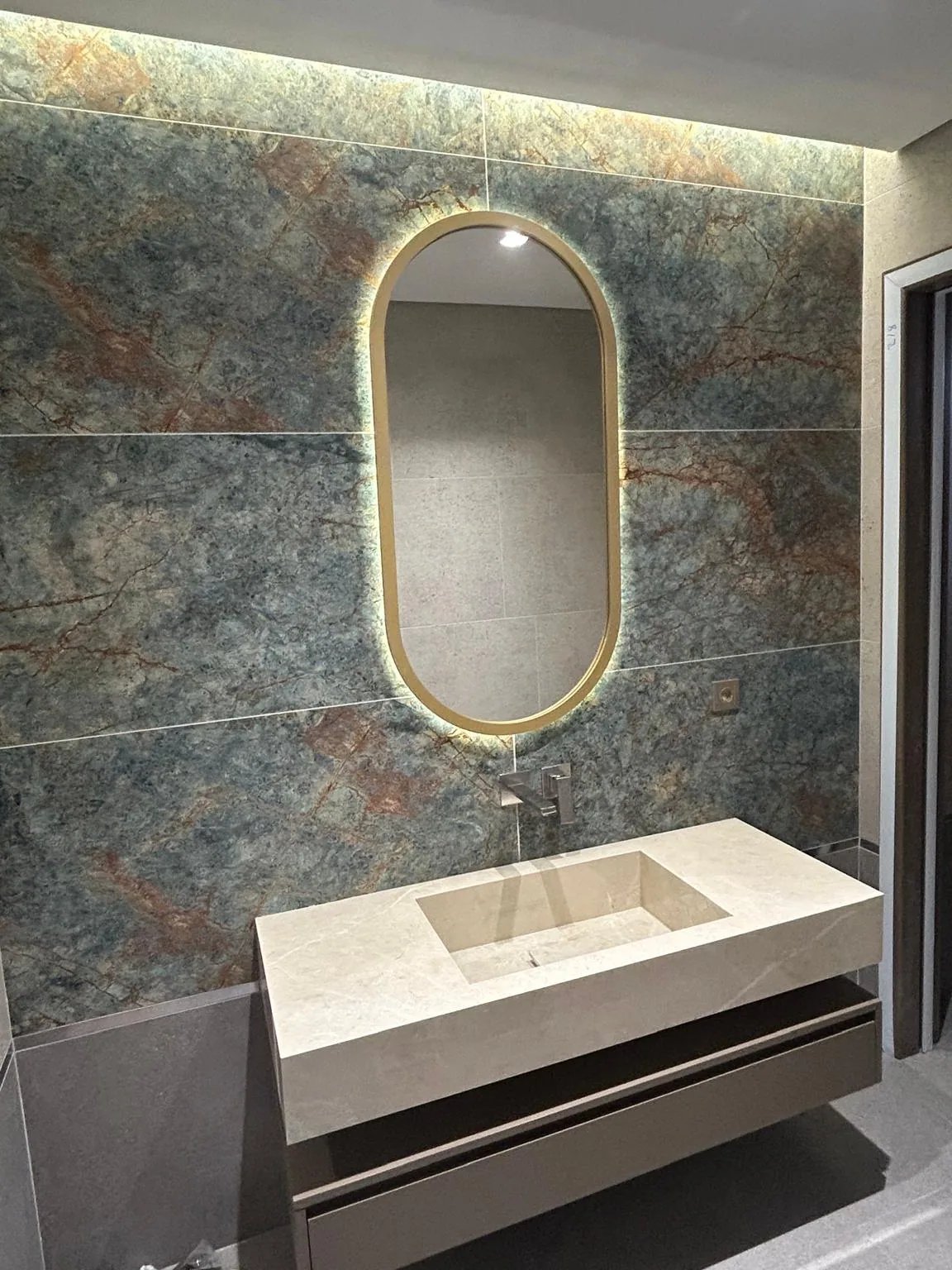
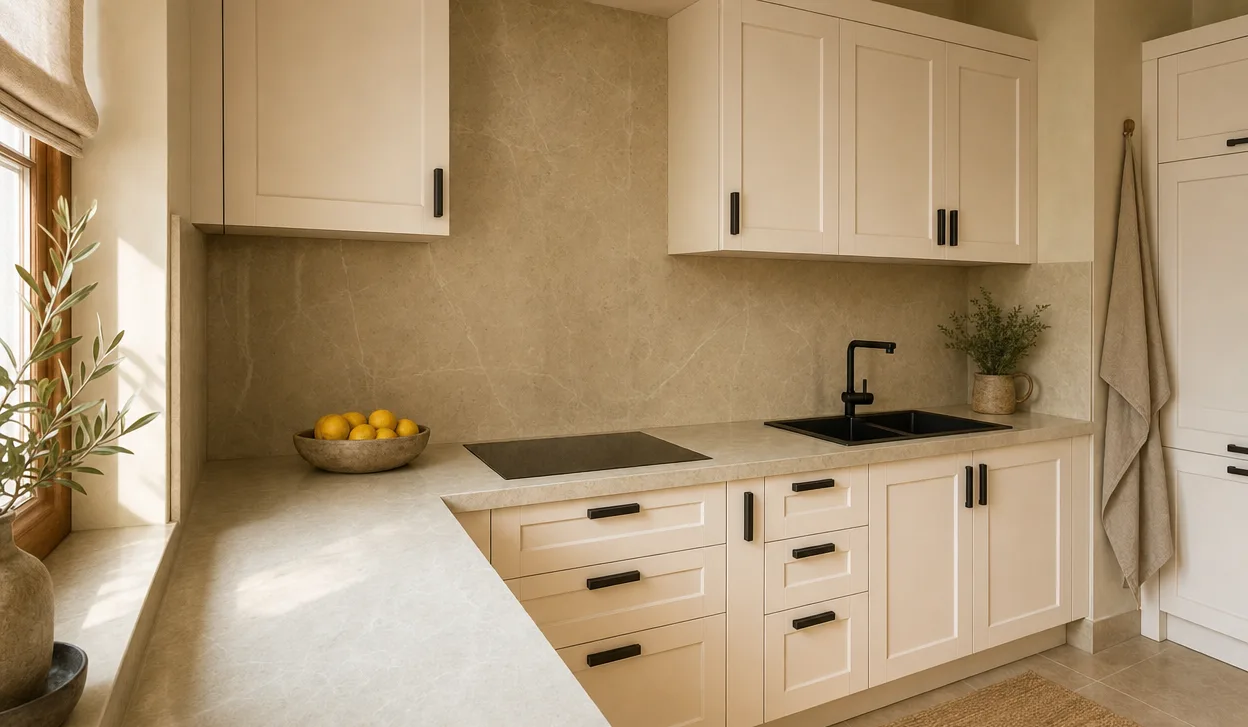
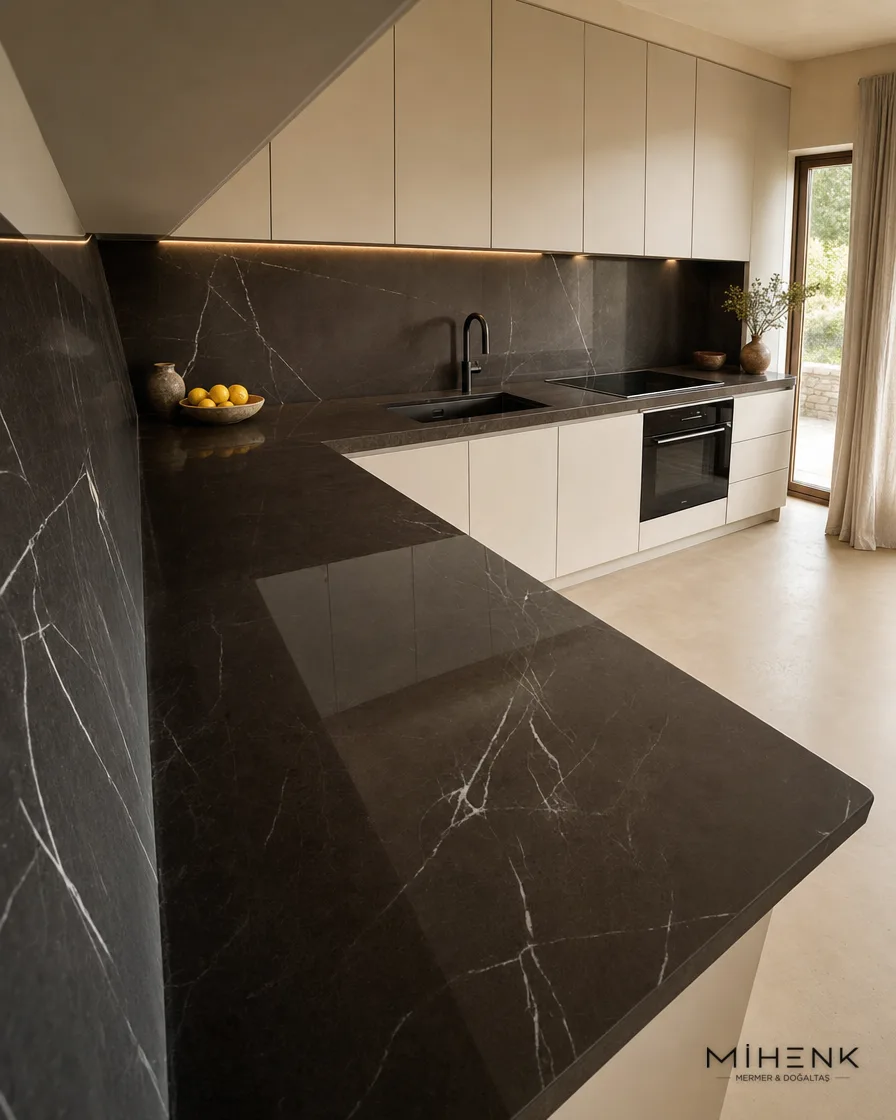
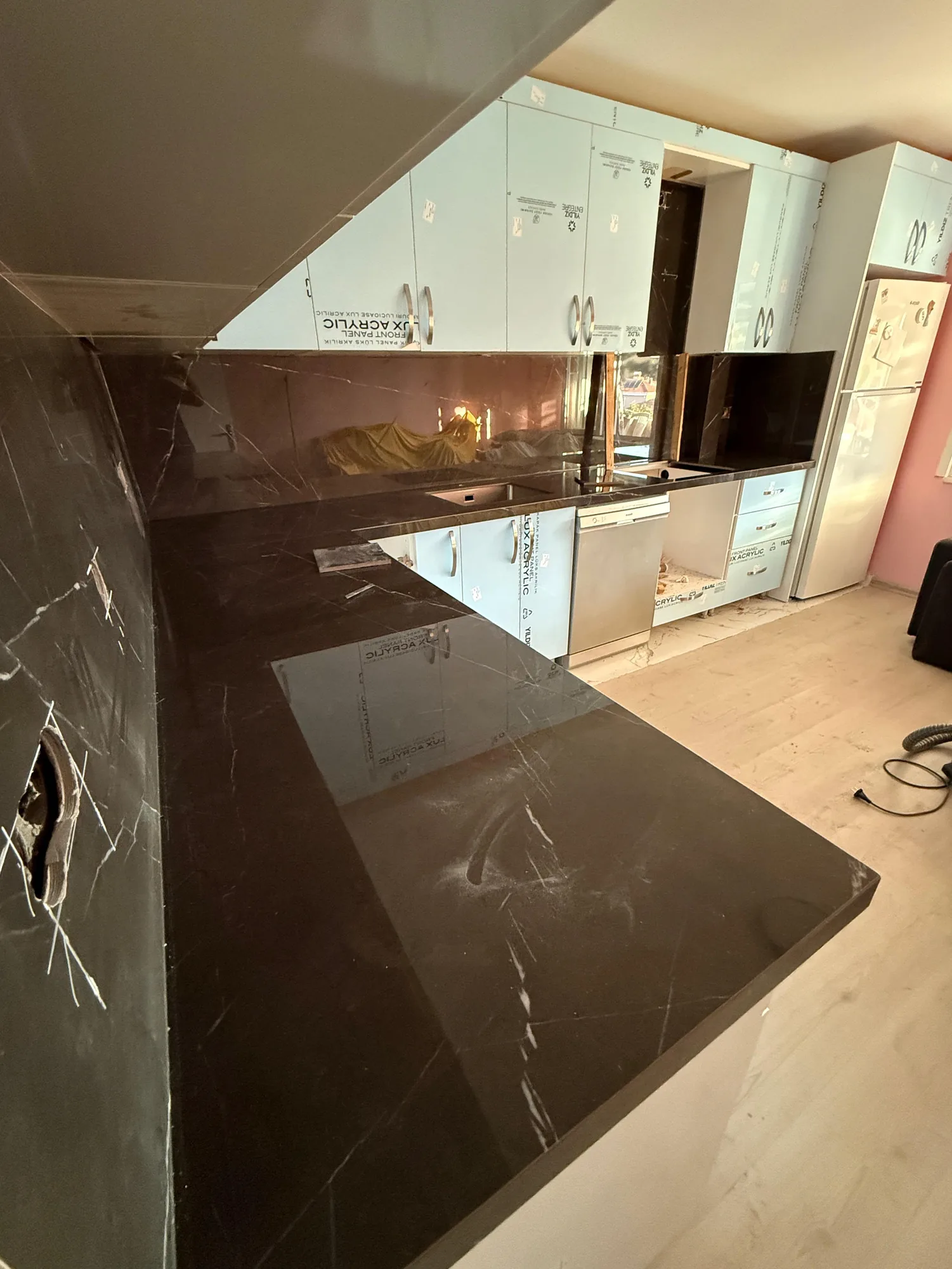
A dark countertop works through the contrast it sets up with light cabinet fronts: the longest horizontal surface in the kitchen reads as a line and becomes the focus of the room. In the work shown here the top makes an L-shaped return; the corner joint was placed away from the hob and sink, because the joint is both the most sensitive point and one that should not sit in the wettest zone.
The hob cut-out was made in the workshop on a CNC bridge saw. A radius was given to the corners of the cut-out; in an area that heats and cools, a sharp internal corner becomes the starting point of a crack. The clearance left around the hob matters for the same reason: stone carries the temperature difference, but room has to be left for movement.
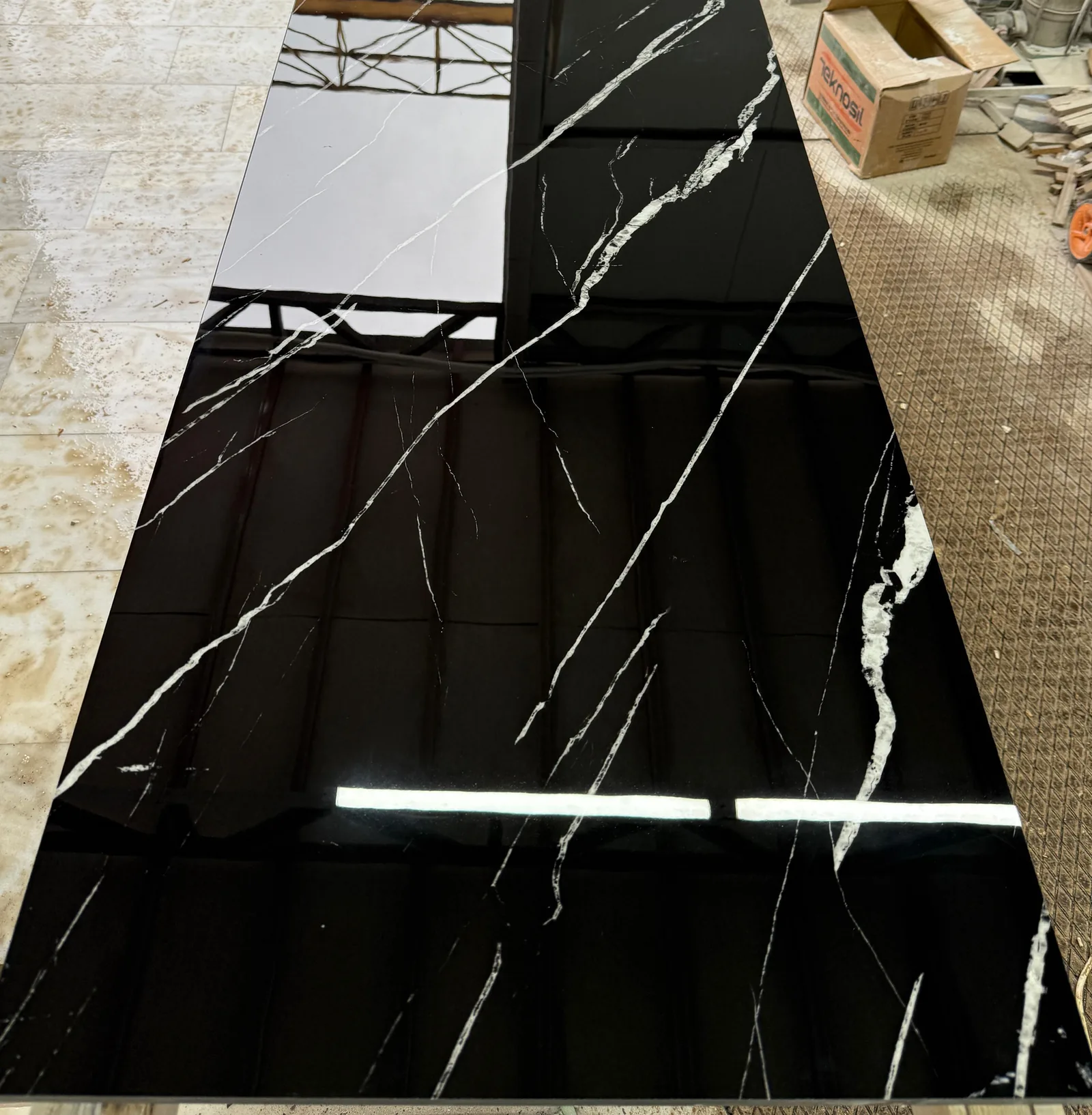
An anthracite surface should be chosen knowing how it behaves day to day. A polished dark surface shows the vein most clearly — and shows limescale from a drying droplet and settled dust just as clearly. For heavily used kitchens we recommend a honed finish; you can see both finishes on the same stone in the surface comparison on our product pages.

 Featured