Stonework on a boat differs from work ashore in two respects: weight and movement. Because weight enters the vessel's stability calculation, we keep the slab at the thinnest viable section and prepare a supporting carcass beneath where needed. Movement changes the bonding detail: under constant vibration and roll, spot bonding is not enough — full contact with a flexible adhesive is needed across the whole bearing surface of the stone.
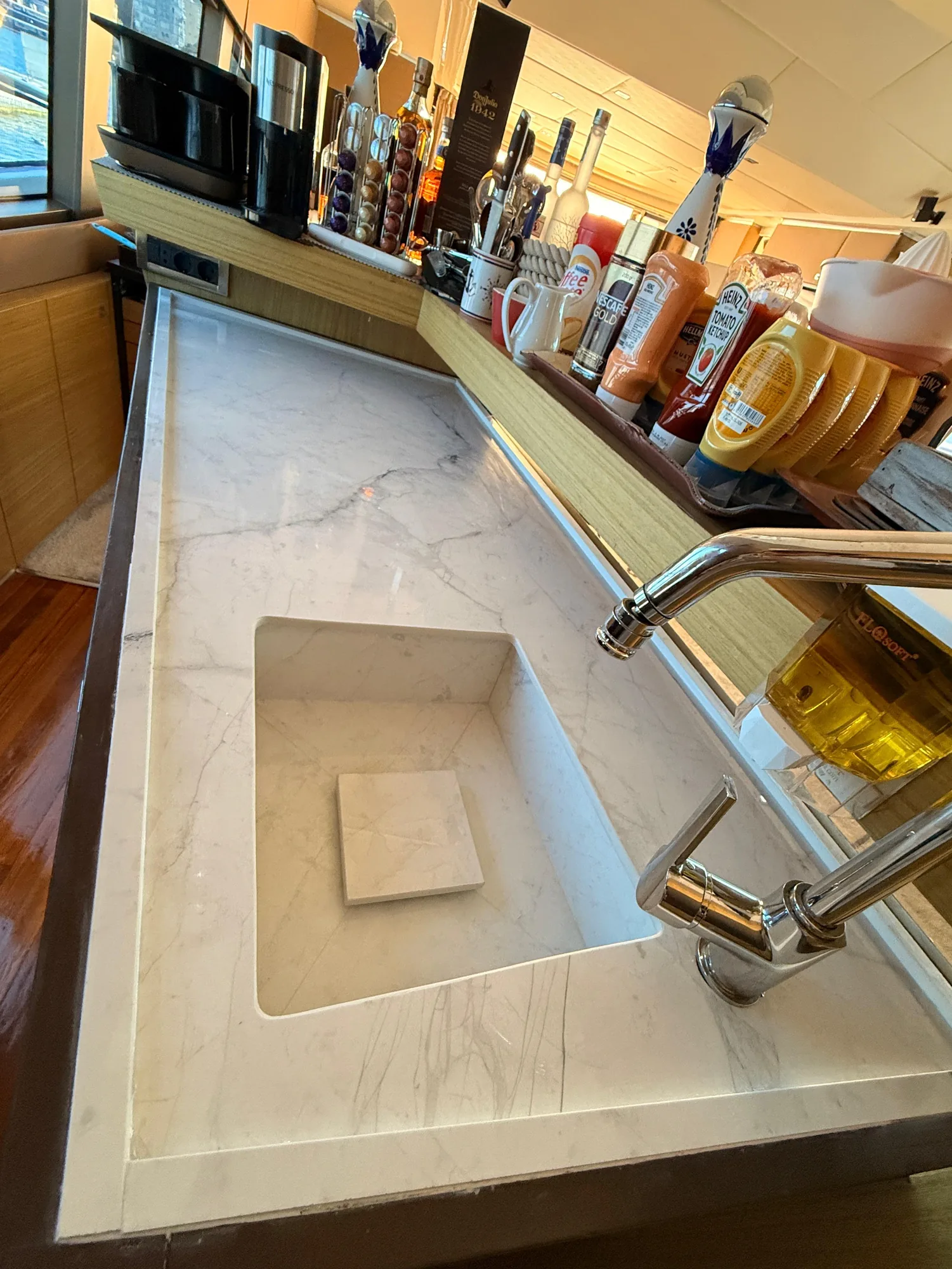
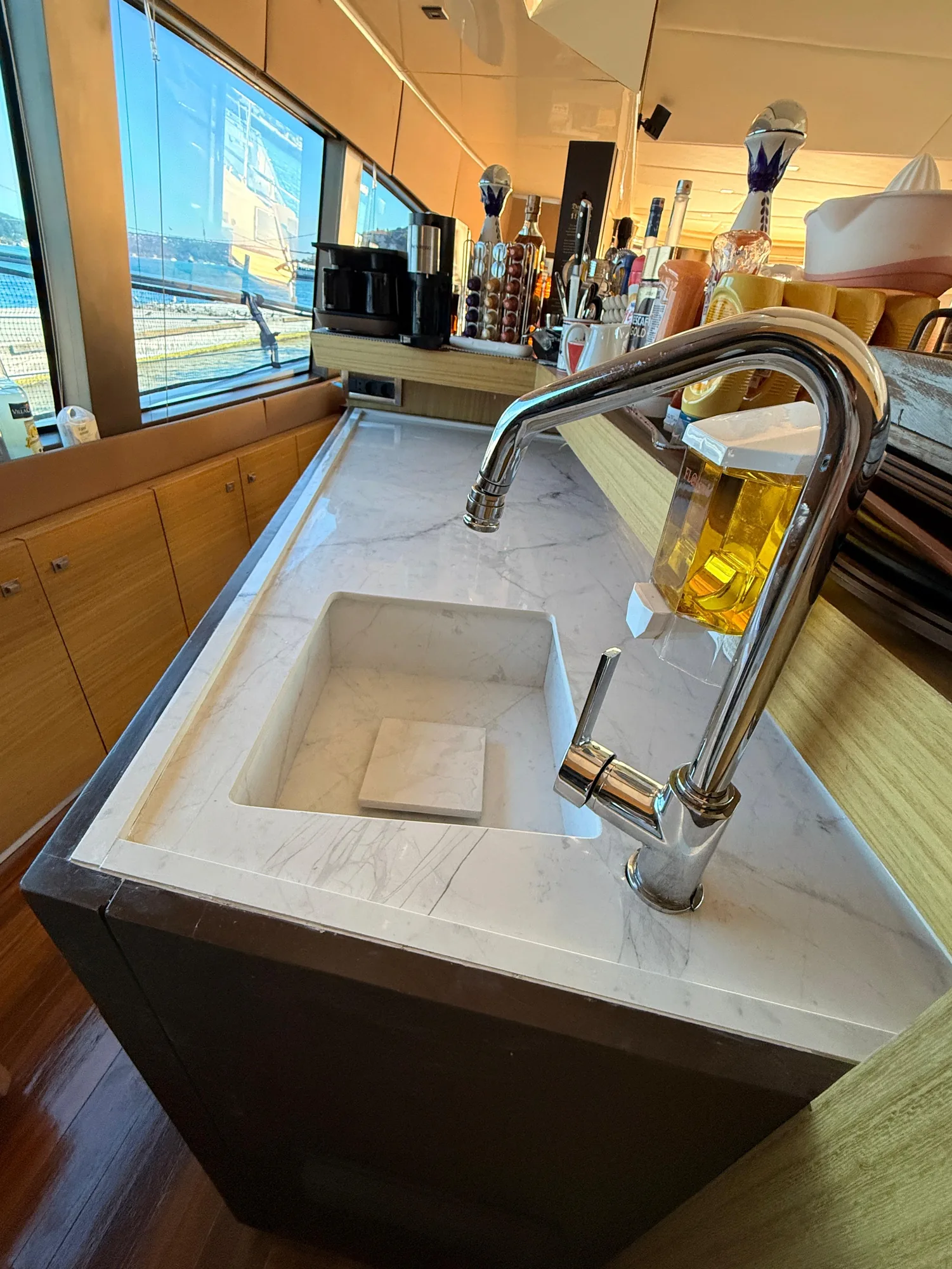
On the bar counter shown here the basin was carved from the counter's own stone. Since splashing is constant at sea, closing the joints perfectly matters: the joints were filled with a stone-dust epoxy and the surface saturated with an impregnator. Salt water is not as aggressive to marble as an acidic liquid, but it leaves crystals as it dries; we recommend regular wiping with fresh water.
The counter edge was finished with a slightly raised lip. That detail is functional rather than decorative: on a vessel under way it slows glasses and plates sliding off the counter.

 Featured