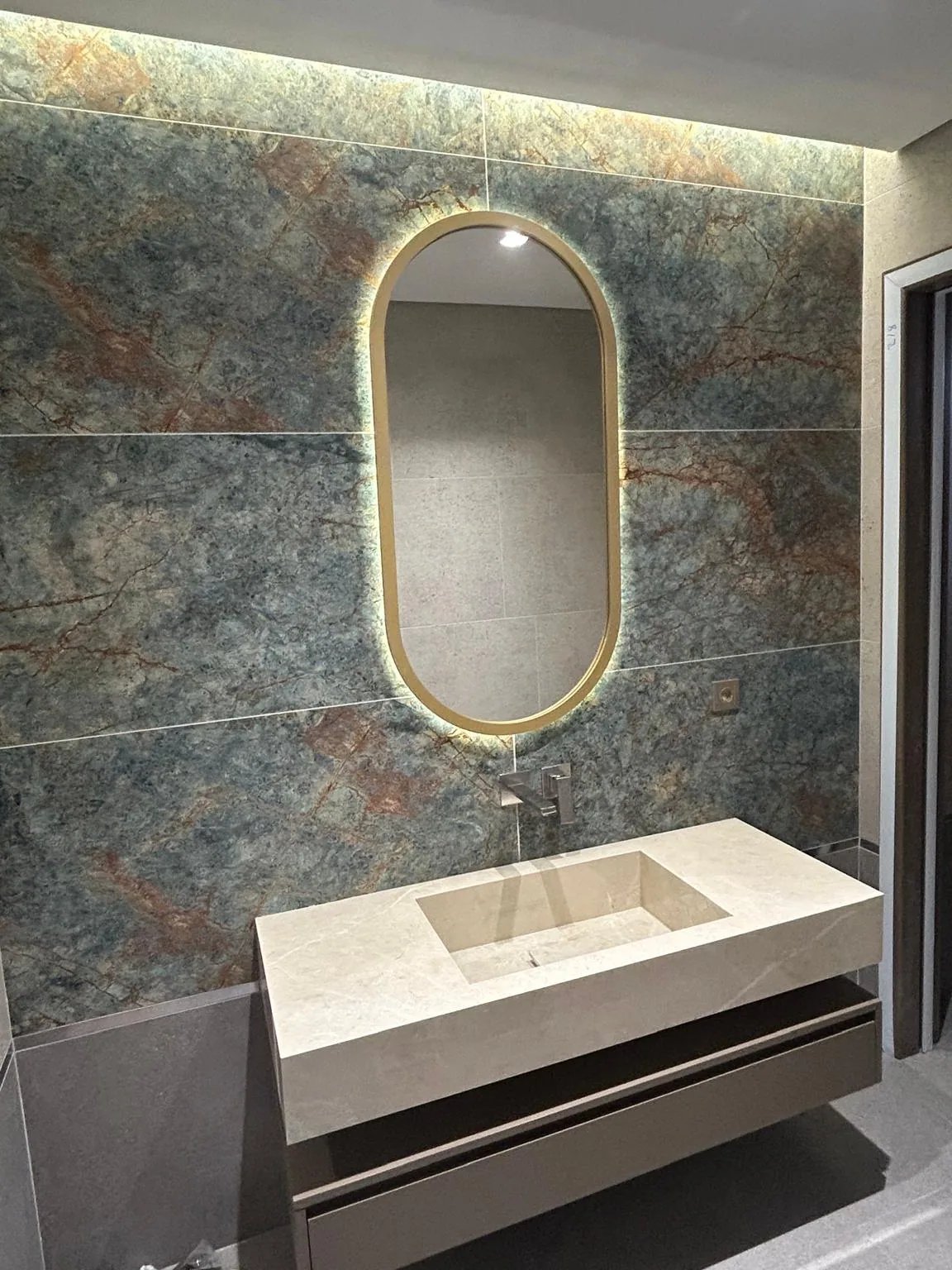
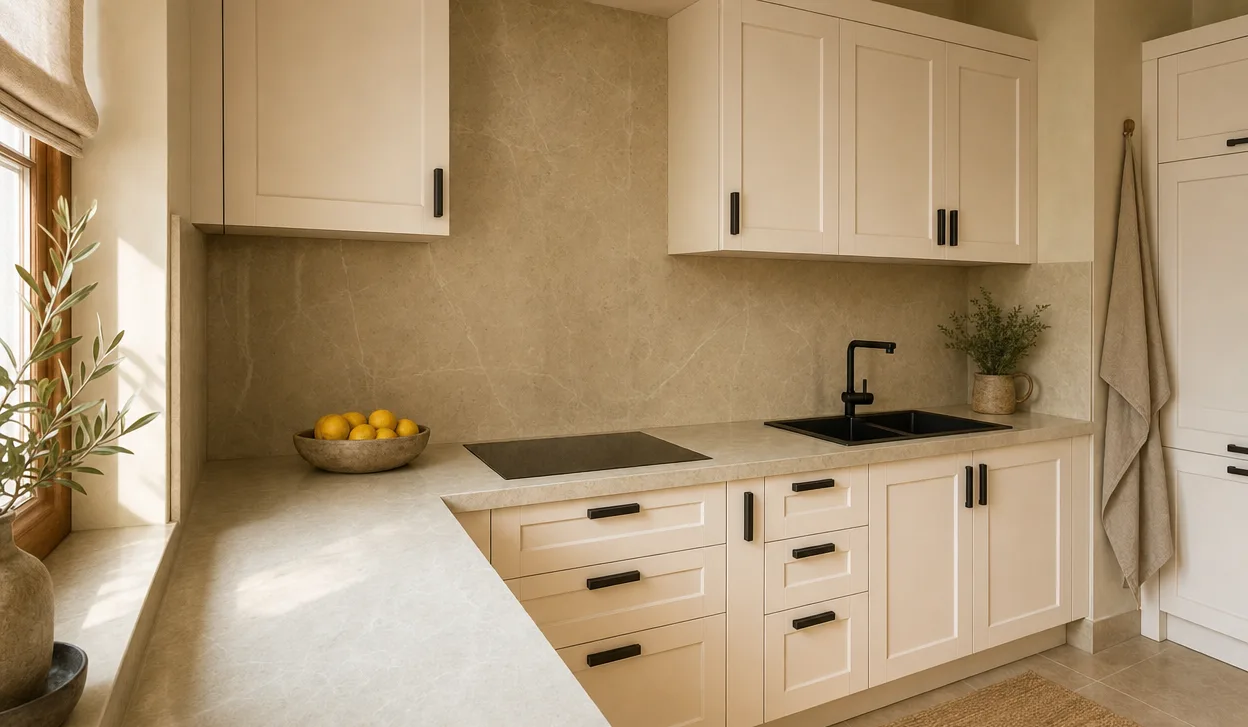
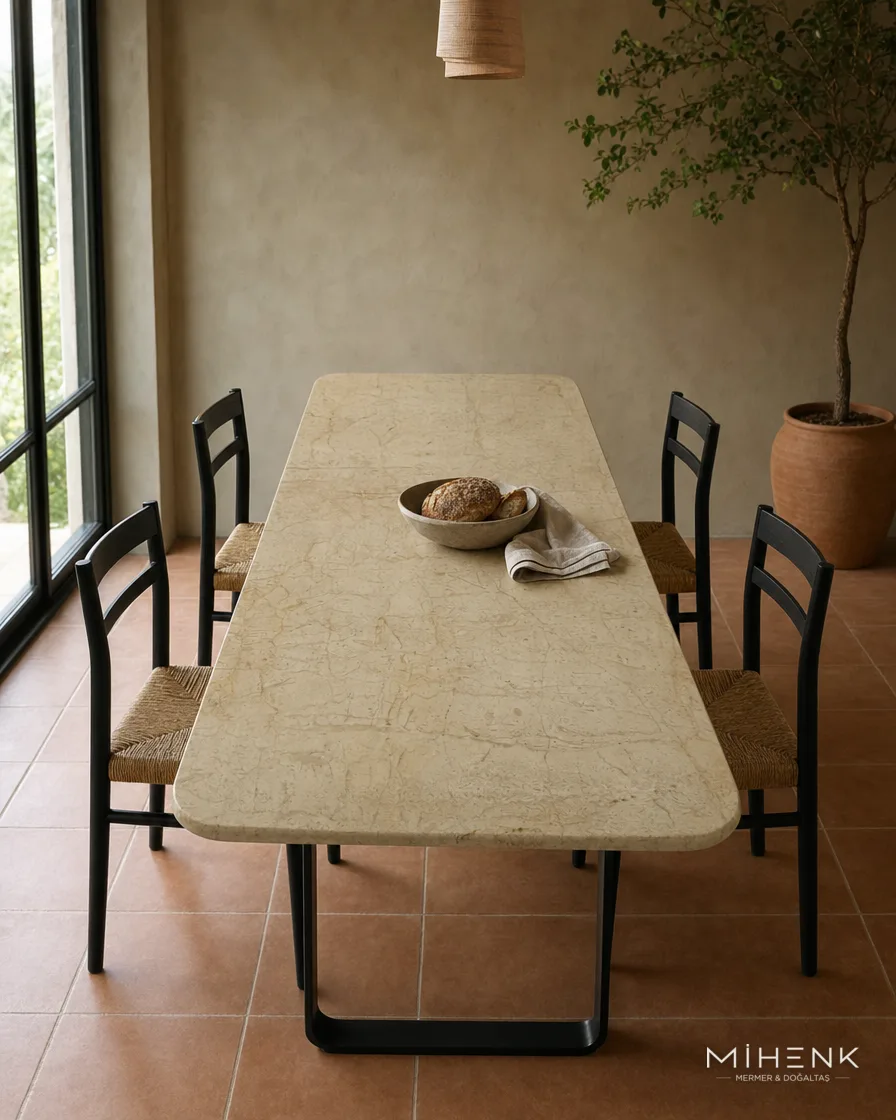
The advantage of beige marble in a table top is warmth: it speaks the same language as timber chairs, brass lighting and linen textiles. On the top shown here the ground is cream-yellow and the veins fine and reddish; there is no pronounced movement on the surface, and the texture distributes evenly across the whole top. Calm slabs like this are an advantage on large tops, because the pattern does not become tiring as it grows.
The corners were softened with a radius. At a dining table this detail is less about aesthetics than use: the first surface a seated person's arm meets is the edge of the top.
Beige marble carries everyday marks better than white, but it is still marble: acidic foods can leave local etching on a polished surface. For heavily used tables we recommend a honed finish. Looking at the surface comparison on the product page makes the finish decision easier — the difference between polished and honed on the same stone cannot be understood from a colour chart.


 Featured