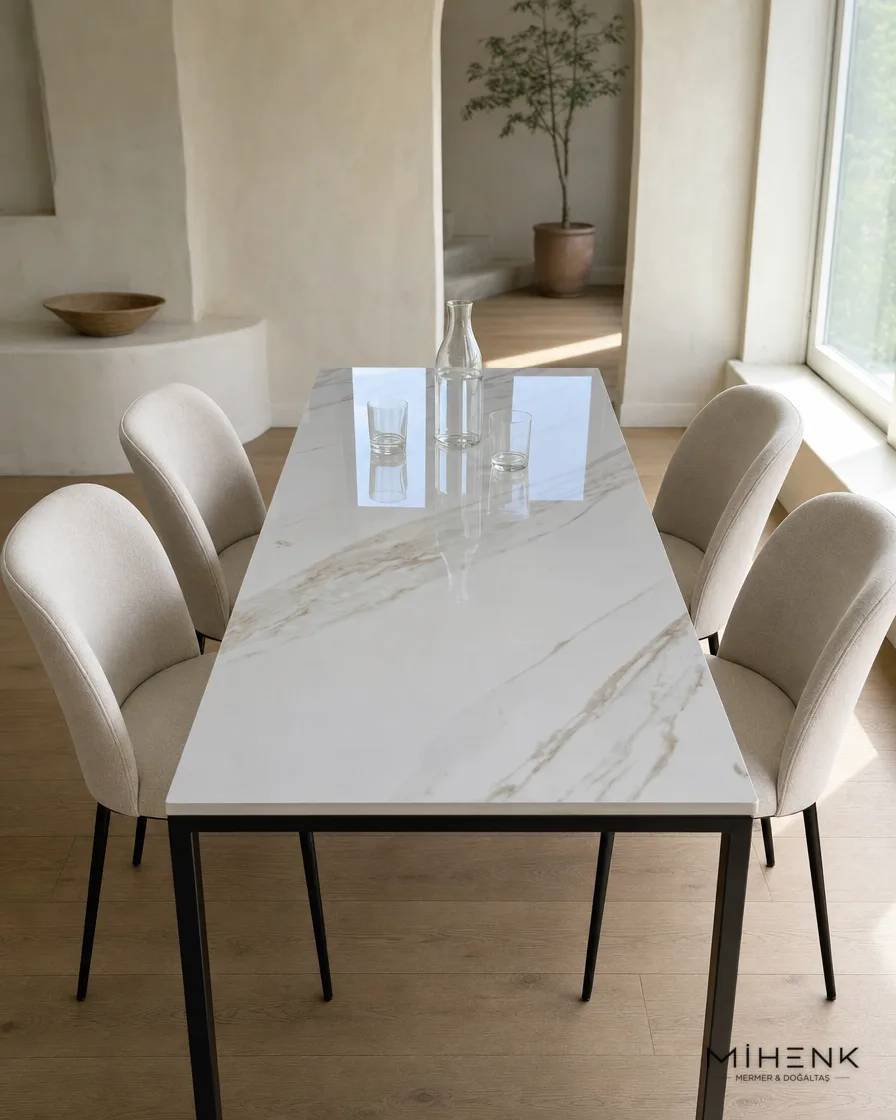
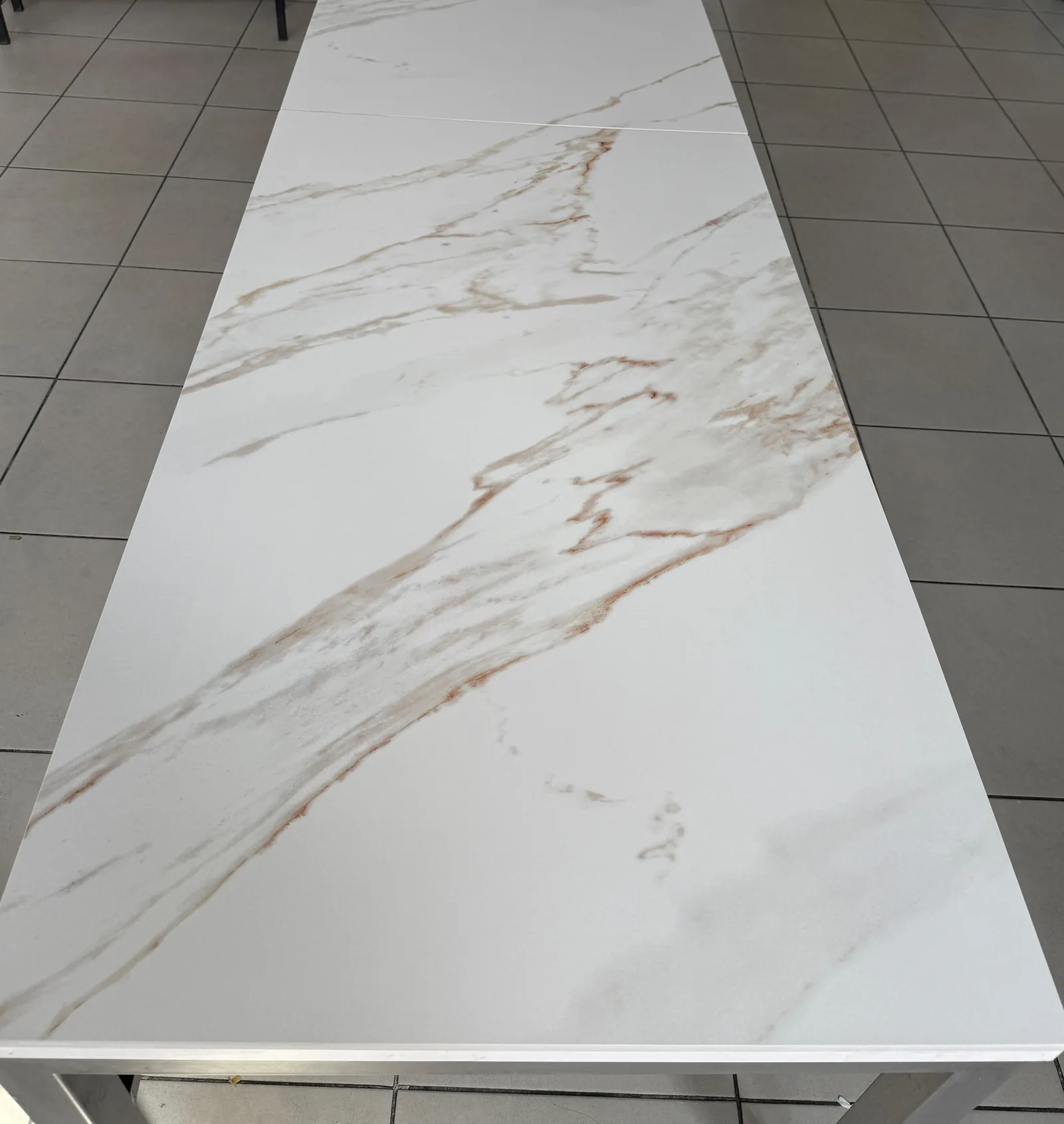
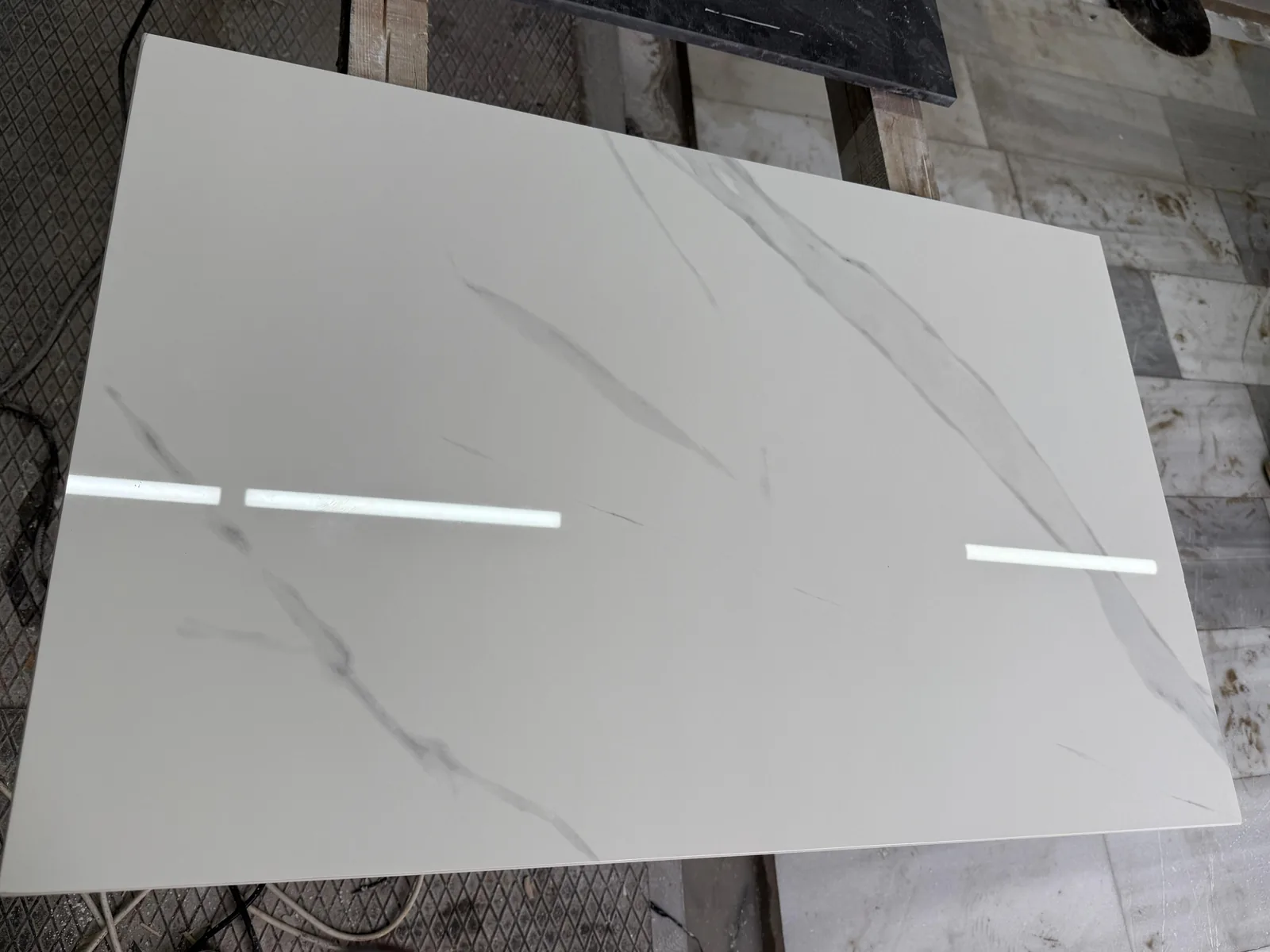
A white marble table top is the surface on which a vein can be followed with the least fatigue: a single gesture over a plain ground. The gallery holds three different characters — a calm white with fine grey veining, a more active white with golden veining, and an almost veinless round top.
Slab selection is again decisive in white stone. On a finely veined slab, a single vein line running through the middle of the top makes the table look elegant; the same line passing near the edge makes the top read unbalanced. On long tops, a vein parallel to the long axis makes the table look longer still, while a diagonal run animates the surface.
Round tops are cut from a single centre and the same profile continues all the way around; this form eases circulation in small dining areas.
The behaviour of white marble worth knowing in daily use is its reaction with acid. On a polished white surface a drop of lemon locally removes the gloss and leaves a matt mark; that mark is corrected by re-polishing the stone in place. On heavily used tables a honed finish hides such marks beyond what the eye can distinguish.




 Featured