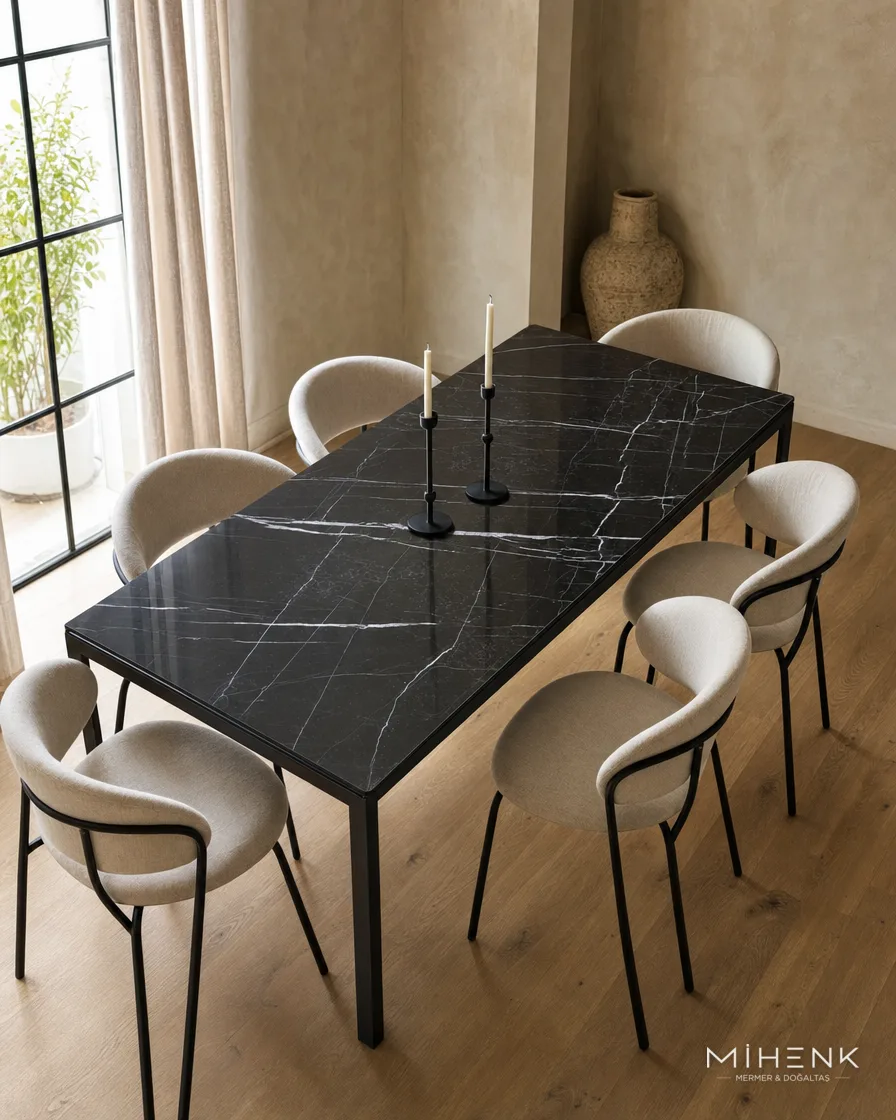
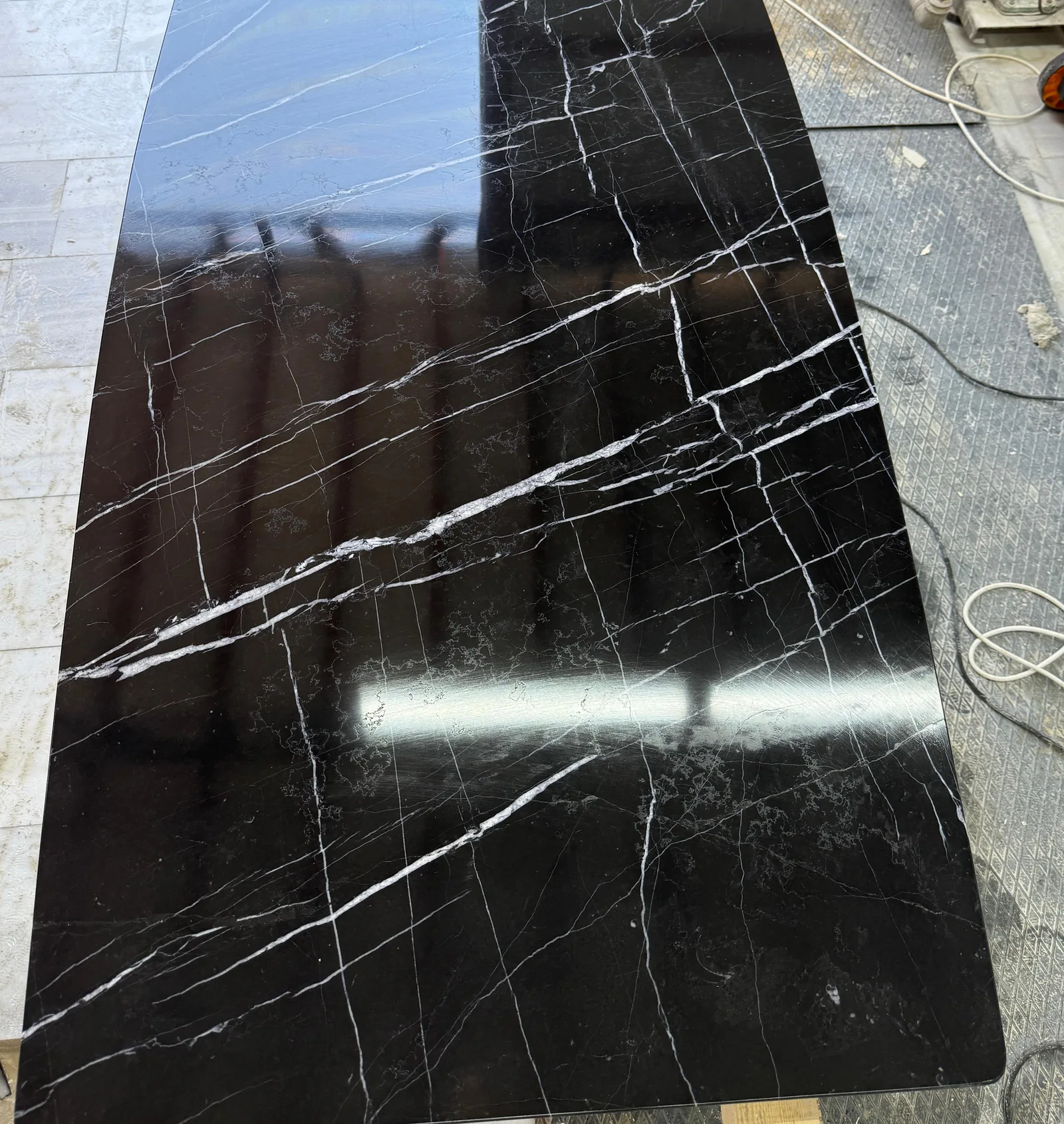
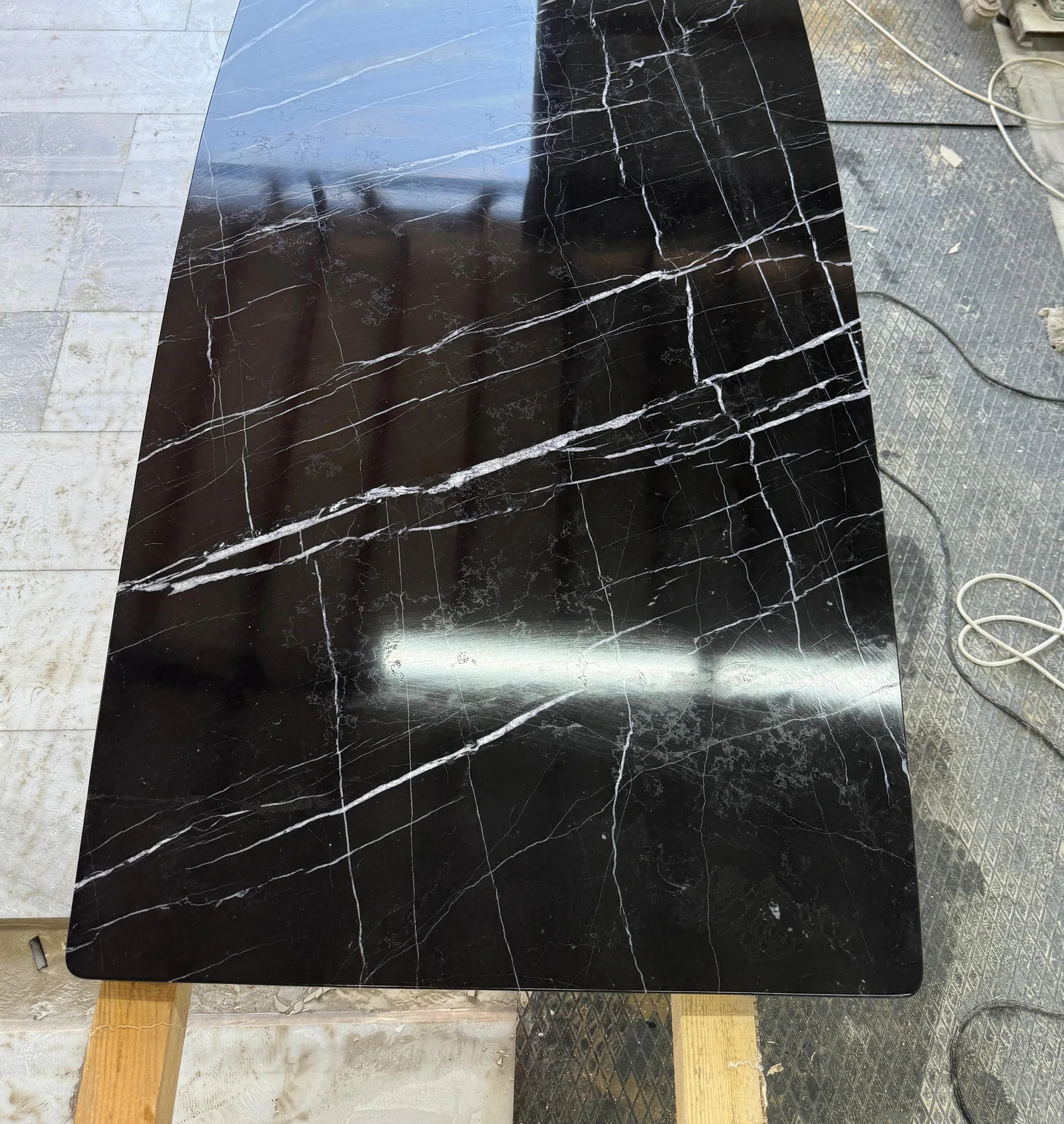
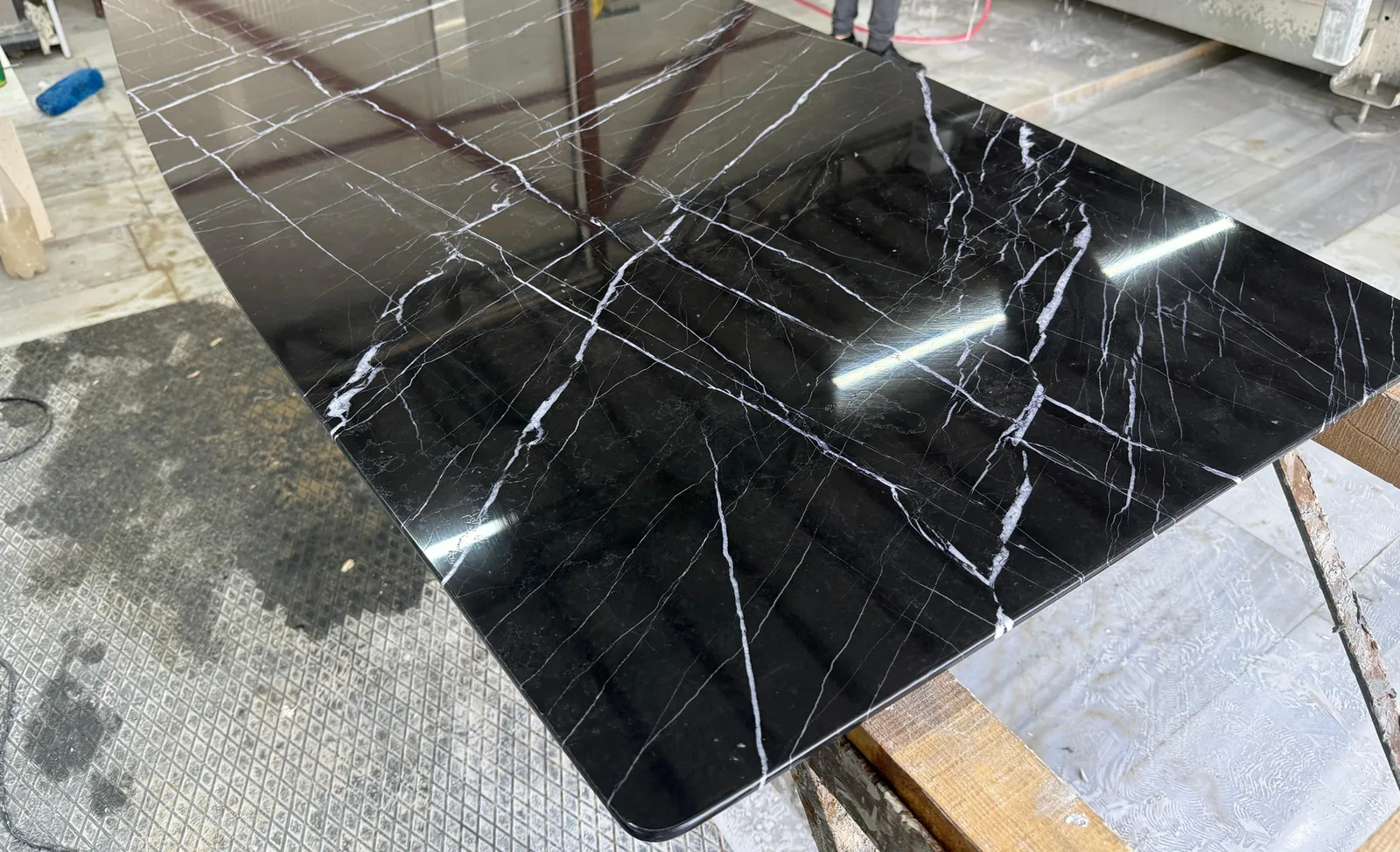
A rectangle is the most honest form for a veined stone: the slab shows as it is, with no curve to soften the direction of the vein. That makes the decision about which region of the slab to use even more prominent. On the top shown here the white veins cross one another diagonally; the cut was set so that the densest crossing falls to one side rather than the centre, so the pattern reads in balance once the table is in place.
The corners were radiused. There are two reasons: a sharp corner is both the point most open to chipping and uncomfortable for anyone moving around the table. The edge can be finished with a square profile, or turned into the appearance of a thick mass by bonding a strip of the same stone underneath.
Care for a polished black surface is simple but regular: a pH-neutral cleaner, coasters for acidic foods, and an annual check of the impregnator. Local etching on the surface can be corrected by re-polishing — a natural consequence of stone being repairable in place.

 Featured